
The Homeowner's Guide to Siding Repair and Replacement in the Lower Mainland
Learn how Lower Mainland homeowners can spot siding failure, weigh repair against replacement, compare materials, and hire the right siding contractor.
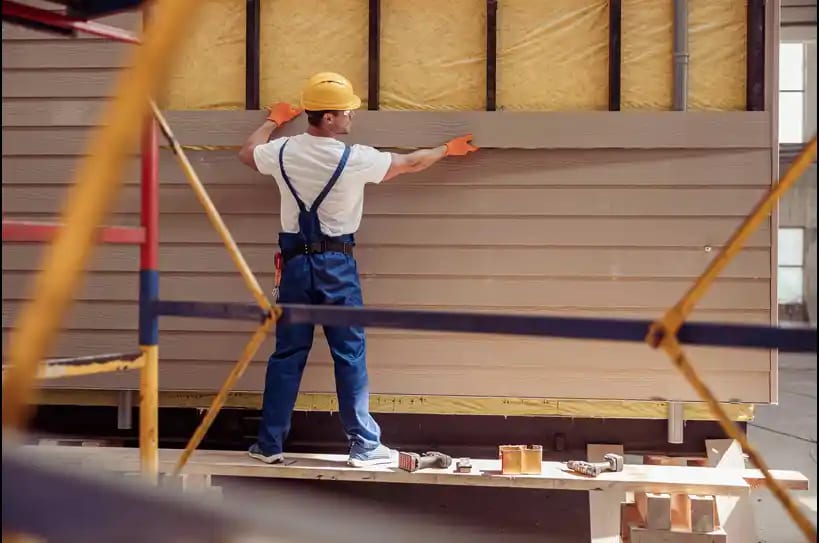
If your siding is cracked, warped, leaking, or simply worn out, you have two paths: targeted repair or full replacement. Repair fits localized damage on siding that still has service life left. Replacement is the sound choice when failure is widespread, the material has aged out, or moisture has already reached the wall behind the cladding. This guide walks Lower Mainland homeowners through the signs, the decision, the materials, the process, and how to hire well.
Why Siding Fails Faster on the Coast
The Lower Mainland is one of the wetter inhabited regions in Canada. Walls here face months of wind-driven rain, high humidity, and repeated freeze-thaw swings in winter. Any weakness in the cladding, the flashing, or the caulking gives water a route inward, and once water reaches the sheathing it does not dry quickly in our climate.
That is why BC building practice moved to the rainscreen assembly: a drainage and ventilation gap between the siding and the water-resistive barrier that lets incidental moisture drain and dry instead of soaking the structure. Homes built or re-clad in recent decades usually have one. Many older homes in Maple Ridge, Pitt Meadows, Coquitlam, and across the region do not, which is a major reason their walls fail earlier.
Signs Your Siding Is Failing
Watch for these symptoms during a slow walk around your home:
- Cracks, splits, or holes in boards or panels, especially at corners and fastener points
- Warping, cupping, or buckling that leaves gaps behind the cladding
- Loose or rattling panels after wind events
- Peeling paint or bubbling finishes, often a sign of moisture pushing out from behind
- Soft, spongy, or rotting spots on wood or wood-composite siding
- Staining or streaking below joints, windows, and penetrations
- Mould, algae, or persistent green film in shaded areas
- Interior clues such as damp drywall, musty odours, or paint failure on exterior-facing walls
One or two of these in a single spot usually points to siding repair. Several of them across different walls points toward replacement.
Repair or Replace: How to Decide
There is no single formula, but four questions settle most cases.
How widespread is the damage?
A cracked board, a panel lifted by wind, or impact damage from a ladder or hail is repairable. When you find failure on multiple elevations, or the same failure repeating across a wall, the material is telling you it is done.
How old is the siding?
Every cladding has a service life. Repairing forty-year-old siding buys time, but you will be repairing again soon, and matching discontinued profiles and faded colours gets harder every year. Money spent patching cladding at the end of its life is often better put toward siding replacement.
What is happening behind the cladding?
This is the decisive question in our climate. If moisture has passed the siding and reached the building paper, sheathing, or framing, surface repair only hides the problem. A contractor can remove a small section to inspect. Wet or rotten sheathing means the wall needs to be opened, dried, repaired, and re-clad properly, which is restoration work as much as siding work, and it is a routine part of replacement projects in our region.
Does the wall meet current standards?
If the existing wall has no rainscreen, no proper flashing at windows, or failing building paper, replacement lets you correct all of it at once. Repair on a substandard wall preserves the substandard wall.
Material Options at a Glance
A replacement is your chance to choose a cladding matched to coastal BC conditions.
- Fiber cement (James Hardie). Cement-based boards and panels that resist rot, insects, and fire, hold paint well, and handle wet climates. A common choice for full replacements in the region.
- Western Red Cedar. A BC native material with natural character and good performance when detailed and maintained correctly.
- Premium vinyl. Economical, light, and low-upkeep, with thicker modern profiles that resist wind better than older generations.
- Engineered wood. Treated wood-strand boards that give a wood look with more dimensional stability than solid lumber.
- Aluminum and steel panel systems (AL13, Longboard, Lux). Architectural panels with concealed-fastener systems, non-combustible substrates, and long-lasting finishes, popular on modern homes and feature walls.
Each has trade-offs in weight, detailing, upkeep, and appearance. A good contractor will talk you through fit rather than pushing one product.
What a Siding Replacement Actually Involves
Knowing the sequence helps you judge quotes and timelines.
- Assessment and scope. Inspection of the existing cladding, probing of suspect areas, and a written scope covering tear-off, wall repairs, and the new assembly.
- Tear-off. Old siding, trim, and usually the old building paper come off so the sheathing can be seen and assessed. Hidden rot is found and priced honestly at this stage, not painted over.
- Sheathing repair. Damaged plywood or boards are replaced and framing issues are corrected.
- Water-resistive barrier and flashing. New membrane is installed and lapped correctly, with flashing at windows, doors, penetrations, and horizontal transitions. This layer, not the siding, is the wall's real waterproofing.
- Rainscreen strapping. Vertical strapping creates the drainage and drying cavity behind the new cladding.
- New cladding and trim. The siding itself goes on with correct fastening, clearances, and joint detailing, followed by trim, caulking where specified, and finishing.
- Cleanup and walkthrough. Debris hauled away, site magnet-swept for nails, and a final review with you.
Most single-family replacements take one to a few weeks depending on size, wall condition, and weather. You can read more about the full process on our siding installation page.
What Drives the Cost
We deliberately avoid quoting figures here because every wall is different, but these are the factors that move the number:
- Wall area and height. More square footage and second or third storey work mean more material and more staging.
- Material choice. Vinyl, fiber cement, cedar, engineered wood, and metal panels sit at different price points, and so do their trims and accessories.
- Condition behind the cladding. Rot repair discovered at tear-off adds scope. A contractor who inspects thoroughly up front will surprise you less.
- Complexity. Gables, bays, multiple corners, mixed materials, and detailed trim packages add labour.
- Access. Tight lot lines, slopes, and landscaping that must be protected all affect the work.
- Upgrades. Adding exterior insulation, new house wrap, or upgraded flashing packages increases scope but improves the wall for decades.
Get quotes that itemize these elements. A single lump-sum number with no scope attached is impossible to compare, and it usually means the allowances for hidden repairs have not been thought through. Two detailed quotes will teach you more about your project than five vague ones.
Choosing a Siding Contractor in the Lower Mainland
The installer matters more than the product. Look for:
- A written, itemized scope covering tear-off, wall repair allowances, membrane, rainscreen, flashing, and the cladding itself
- Familiarity with rainscreen detailing and BC moisture management, not just nailing up boards
- Manufacturer-appropriate installation for the product you choose, since warranties depend on it
- Local references and addresses you can drive past
- Clear communication about schedule, weather delays, and how hidden damage will be handled and priced
- Proper insurance coverage for the crew and your property
Be cautious with door-knockers after storms and with quotes dramatically below the others. In siding, the invisible layers are where corners get cut.
When Insurance Is Involved
Insurance typically covers sudden, accidental damage: a windstorm that strips panels, a tree strike, or fire. It generally does not cover gradual deterioration or long-term leaks. If a storm damages your home, photograph everything before touching it, arrange temporary protection so the damage does not spread, notify your insurer, and get a contractor's written assessment. Berkana works on wind damage restoration projects across the region and can document the damage in the format adjusters need.
The Bottom Line
Repair when damage is local and the wall behind is sound. Replace when failure is widespread, the material is aged out, or moisture has reached the structure. Either way, in the Lower Mainland the layers you cannot see, membrane, flashing, and rainscreen, determine how long the work lasts.
Berkana Construction Management has been repairing and replacing siding across Maple Ridge and the Lower Mainland since 2019. If you are weighing repair against replacement, call (672) 771-6868 or request an assessment and we will give you a straight answer about what your walls actually need.
- 9 Warning Signs Your Siding Needs Repair (Before Water Gets In)
- Soffit and Fascia: The Roofline Details That Protect Your Whole House
- Windstorm Damaged Your Siding? Here Is What To Do, Step by Step
- Why the Smart Time to Insulate Your Walls Is During a Siding Replacement
- AL13 vs Longboard vs Lux: Comparing Aluminum and Steel Panel Siding
- Hardie Plank, Panel or Shingle: Which James Hardie Profile Fits Your Home?
- Cedar vs Engineered Wood Siding: A Lower Mainland Comparison
- Fiber Cement vs Vinyl Siding: The Long-Term Ownership Math
- ColorPlus vs Site-Painted James Hardie: Finish, Warranty and Upkeep
- How Long Does Siding Last in BC? Lifespans by Material
- Your Siding Replacement Week by Week: What Actually Happens
- What Drives the Cost of a Siding Project? 9 Factors Explained
- Paint It or Replace It? An Honest Framework for Aging Siding
- 7 Siding Checks to Make Before the Winter Storms Arrive
- Siding Damage Insurance Claims: How the Process Actually Works