
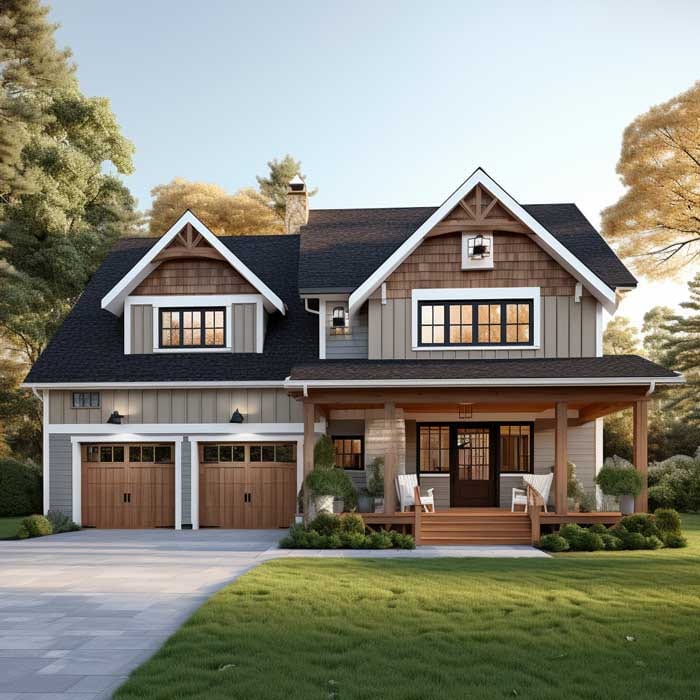
Engineered Wood
Engineered wood products give Lower Mainland homes the painted-wood look with modern durability and a strong warranty. Berkana Construction installs engineered wood lap, panel and trim on homes across the region.
What you are getting.
Engineered wood siding is made from wood strands bonded with resins and treated against rot and insects, then finished to look like painted cedar. It is lighter and easier to work than fiber cement, more impact-resistant than vinyl, and delivers a convincing wood appearance with far less maintenance than the real thing.
- Authentic embossed woodgrain
- Treated against rot and insects
- High impact resistance
- Lighter and faster to install than fiber cement
- Factory-primed or prefinished
- Strong manufacturer warranties
Where this material shines.
Family Homes
Warm traditional looks with less upkeep.
Board & Batten
Popular farmhouse-style exteriors.
Value Upgrades
A step up from vinyl on a budget.
Cold-Weather Sites
Handles impacts vinyl cannot.
How we install it.
Product selection
Lap, panel or board-and-batten with prefinished or paint-ready options.
Assembly prep
Barrier, rainscreen and flashing detailed for a wood-based product in a wet climate.
Install and finish
Manufacturer-spec fastening, sealed cuts and finish paint where specified.
Services that use this material.
Siding
Complete siding services for houses, townhomes and commercial buildings: installation, repair and full replacement in every major cladding material.
Siding Installation
New siding installed on homes, additions and commercial buildings, in fiber cement, vinyl, cedar, engineered wood and modern panel systems.
Siding Repair
Cracked, loose, rotten or storm-damaged siding repaired and colour-matched, before small problems become water damage.
Siding Replacement
Full tear-off and replacement of aging or failing siding, with substrate repairs, modern weather detailing and your choice of material.
Engineered Wood: what Lower Mainland owners should know.
Engineered Wood Siding: Real Wood, Re-Engineered for Wet Climates
Somewhere between natural lumber and fully mineral claddings sits a category that borrows from both: engineered wood siding. It is genuine wood, which is why it looks and works like wood, but it is wood taken apart and rebuilt with modern resins and treatments to remove the weaknesses that make sawn boards a gamble in a rainforest climate. Over the past decade it has become a serious contender on Lower Mainland re-siding projects, valued by crews for how it handles and by owners for how it prices. Understanding what it is, and what it still is not, is the point of this page.
Strand-and-Resin Construction: What You Are Actually Buying
Engineered wood siding starts as wood strands or fibre, not boards. The wood is cut into thin strands, coated in waxes and resin binders, laid up in oriented mats and pressed under heat into a dense, uniform substrate, a process related to the one behind the OSB sheathing on most modern walls, but refined for exterior finish duty. The board that emerges has no knots, no grain runout, no pitch pockets and no weak spring-growth bands, because the strand structure averages the wood's properties across every square centimetre.
That uniformity is the product's quiet advantage. Sawn lumber varies board to board; engineered board is the same everywhere, so it machines cleanly, holds fasteners consistently and resists the splitting that plagues nailed natural wood. It also arrives in long lengths, fewer butt joints on a wall, and in consistent widths that keep coursing tidy over a whole elevation.
Built-In Defence: Treatment Against Rot and Insects
Bare wood strands would not last a winter here, and the manufacturers know it. During production, the strands are saturated with zinc borate, a mineral preservative that makes the wood inedible to fungi and insects, and the resin matrix plus waxes reduce how much water the board takes up in the first place. An overlay and factory priming, or a full factory finish, seal the face. The protection is therefore distributed through the material rather than applied over its surface, which is the fundamental difference between engineered wood and a well-painted sawn board.
Manufacturers back this treatment with long limited warranties against fungal decay, and the category's track record in its modern formulation has been solid. The earlier generation of composite hardboard sidings from decades past failed publicly and left a reputational shadow; today's strand-based, borate-treated products are a different engineering answer to the same idea, and it is fair to judge them on their own record rather than their ancestors'.
The Look: Embossed Grain and Deep Textures
Because the substrate is uniform, the face can be anything, and manufacturers emboss it with a cedar-like grain texture that is deeper and more consistent than the printed woodgrains on vinyl. Painted in a solid colour, an engineered wood wall is very difficult to distinguish from painted sawn cedar at any normal viewing distance, and its shadow lines are true because the boards are thick enough to lap like real lumber. Smooth faces are also available for modern tastes. Factory-finished lines offer curated palettes cured under controlled conditions; primed product leaves colour to your painter and keeps future colour changes easy.
Profiles: Lap, Panel and Board-and-Batten
The format range covers the traditional siding vocabulary. Horizontal lap in several widths is the volume seller and the profile that carries most heritage and transitional designs. Vertical panel sheets with grooved or plain faces clad gables and full walls economically. Board-and-batten combinations, panel plus applied battens or wide purpose-made boards, deliver the modern farmhouse look that a large share of our clients now request. Matching trim boards in the same engineered material complete openings and corners, and a coordinated fascia detail keeps rooflines consistent with the walls.
Installing It Right in a Wet Climate
Engineered wood is more forgiving to install than fibre cement, it is light, cuts with ordinary blades and does not shatter, but a coastal installation still succeeds or fails on its details, and the manufacturer instructions are explicit for good reason.
The wall behind it comes first: a rainscreen cavity over the water-resistive barrier, standard practice in coastal BC, gives any intruded moisture a drainage path and lets the cladding dry from behind. The boards themselves must keep their specified clearances from grade, roofing, decks and flashings so end grain never sits in water. Field-cut ends want sealing or priming as directed, since cut edges are where a resin-bound board is thirstiest. Butt joints are gapped and treated per the instructions rather than jammed tight, fastening follows the nailing schedule into framing, and flashings above openings shed water clear of the courses below. None of this is exotic; it is the same moisture logic our siding installation process applies to every material, tuned to this product's particulars. Skipped, it is how any wood-based cladding gets into trouble through a long Fraser Valley wet season, when walls can stay damp for weeks at a stretch and every unsealed cut edge becomes a slow intake point. The product tolerates far more abuse than sawn lumber, but tolerance is not immunity, and treating it with the same respect we give cedar is what lets the warranties mean something decades from now.
Engineered Wood Versus Fibre Cement
This is the comparison most clients actually weigh, since the two products compete for the same walls at similar aesthetics. Engineered wood is lighter by a wide margin, which speeds installation, eases handling on tall walls, and avoids the silica dust control that cement board cutting requires. It is tougher against impact, a cement board can crack where a strand board dents or shrugs, and it feels warmer underhand. Installed cost typically lands below comparable James Hardie fibre cement work.
Fibre cement answers with two properties engineered wood cannot match. It is non-combustible, where engineered wood, being wood, burns, a consideration for interface-zone homes and tight lot lines. And it is inorganic, immune to decay outright rather than defended against it by treatment. Both products, well installed, are long-term claddings; the choice tilts on fire exposure, budget, and how much weight you give mineral permanence over wood's workability. We install both and will argue either side honestly on your site.
Engineered Wood Versus Vinyl
Against vinyl siding, engineered wood is the step up in substance. It is rigid, sits flat, takes real paint in any colour, and presents true board thickness at corners and openings where vinyl shows hollow returns. Vinyl counters with lower cost and freedom from repainting forever. An owner who wants an exterior to disappear from their to-do list may still choose vinyl; an owner who wants a painted wood house without wood's failure modes finds engineered wood the more convincing product. The repainting cycle is engineered wood's ongoing cost of ownership, long intervals, especially on factory finishes, but never zero.
Where It Fits Here
Across Maple Ridge, Pitt Meadows, Mission and the wider region, we reach for engineered wood on family homes replacing rotted or failing cladding on a working budget, on new builds and additions chasing the board-and-batten look affordably, and on projects where crews must work fast in short dry-weather windows, because the material's light weight and long lengths genuinely compress schedules. Paired with upgraded exterior insulation during a reclad, it helps deliver a warmer, quieter house along with the new face. Berkana Construction Management has installed it across the Lower Mainland since 2019 and quotes it beside fibre cement, vinyl and five other systems, so its place on your shortlist gets earned, not assumed.
Weigh It on Your Own Walls
If a re-side is coming and engineered wood is on your radar, call Berkana Construction Management at (672) 771-6868. We serve the whole Lower Mainland from Maple Ridge, and we will bring samples, check your walls, and price this material side by side against its rivals so you can choose with the full picture in front of you.
Common questions, engineered wood.
Get a free written quote.
Tell us about your building and what you have in mind. We respond within one business day to book a free site visit, then follow up with a clear, line-itemed quote.