
Soffit and Fascia: The Roofline Details That Protect Your Whole House
What soffit and fascia do, how they fail in BC's wet climate, and when Lower Mainland homeowners should repair or replace these roofline components.
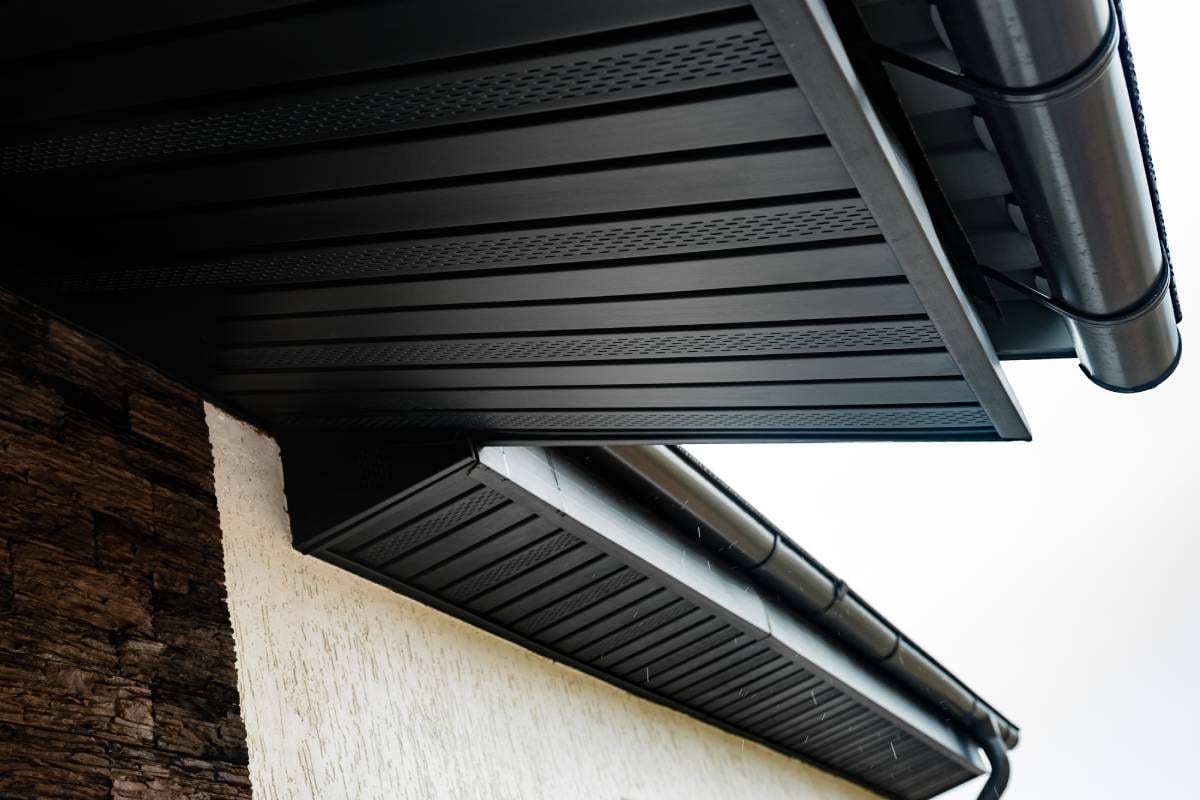
Soffit and fascia are the finishing components of your roofline: the soffit closes and ventilates the underside of the roof overhang, and the fascia caps the edge where the gutters hang. They are easy to overlook, but they control attic ventilation and keep wind-driven rain, pests, and overflowing gutter water out of your roof structure and walls. In the Lower Mainland's wet climate, failed soffit or fascia quietly feeds moisture into places you cannot see.
What Soffit Actually Does
Walk to the edge of your house and look straight up under the roof overhang. That panelling is the soffit. On most homes it is vented aluminum or vinyl; on older houses it may be plywood or tongue-and-groove wood.
Its jobs are simple but important:
- Attic air intake. Vented soffit panels let outside air enter at the eaves. That air flows up through the attic and exits at roof or ridge vents, carrying moisture out with it.
- Sealing the eaves. Soffit closes the gap between the wall and the roof edge, keeping out rain, birds, wasps, and rodents.
- Finishing the overhang. It gives the roofline a clean, closed appearance and protects the rafter tails from weather.
The ventilation role deserves emphasis in our region. Household activity pushes warm, humid air into the attic all winter. Without steady intake at the soffits, that moisture condenses on the cold underside of the roof sheathing, and over time you get mould, darkened wood, and decay. Many attic moisture problems we see trace back not to the roof surface but to soffits that were blocked by insulation, painted shut, or never vented at all.
What Fascia Actually Does
Fascia is the vertical board running along the roof edge, capping the ends of the rafters or trusses. Your gutters are screwed into it. That position makes fascia both essential and vulnerable:
- It carries the weight of gutters full of water and Lower Mainland fir and cedar needles.
- It takes the splash and overflow every time gutters clog, which in this region is a seasonal event, not a rarity.
- It seals the roof edge so wind-driven rain cannot get into the eaves and attic.
When fascia rots, gutters sag or detach, water runs down the wall behind the siding, and the rot can migrate into rafter ends. A sagging gutter line viewed from the street is very often a fascia problem, not a gutter problem.
How Roofline Components Fail in the Lower Mainland
Our climate attacks soffit and fascia in predictable ways:
- Sustained wetting. Months of rain plus overflow from needle-clogged gutters keep the roof edge wet for long stretches, and wood components decay from the back side where you cannot see it.
- Wind events. Fall and winter storms lift loose soffit panels and peel back aluminum fascia cladding. Once one panel is gone, wind and rain enter the eaves freely.
- Condensation from below. Poor attic ventilation wets the roofline assembly from inside, so soffit problems can be both cause and casualty of attic moisture.
- Pests. Wasps, birds, and squirrels exploit any gap, and their nests block ventilation and hold moisture against the wood.
Warning Signs Worth Acting On
Do a slow lap of the house with binoculars twice a year and look for:
- Peeling paint or dark staining on fascia boards, especially behind gutters
- Sagging, wavy, or detaching gutter lines
- Soffit panels that are cracked, hanging, discoloured, or missing
- Visible daylight or nest debris in the eaves
- Mould or musty smell in the attic, or frost on the underside of the sheathing in winter
- Soft wood when you press on fascia with a ladder-height inspection
Interior symptoms count too. Stains at the ceiling edge of an upstairs room often trace to water entering at a failed roofline component rather than the middle of the roof.
Repair or Replace?
Isolated damage, one lifted soffit panel, a short run of weathered fascia, is a straightforward repair. Replacement of longer runs makes sense when rot is widespread, when panels are failing repeatedly, or when the existing material was never vented properly and the attic shows it. Modern vented aluminum soffit and clad fascia systems need very little upkeep and stand up well to coastal moisture, which is why they are the standard on newer Lower Mainland homes.
The other natural moment to address the roofline is during siding work. If walls are being redone anyway, integrating new soffit and fascia lets every trim junction be flashed and sealed as one continuous system rather than patched together. Our guide to siding repair and replacement in the Lower Mainland covers how these decisions fit together.
One note on scope: soffit and fascia are exterior finishing components, and that is the work we do. Problems with the roof surface itself, shingles, membranes, and roof leaks, belong with a roofing contractor.
Small Components, Large Consequences
Soffit and fascia protect the two most vulnerable transitions on your house: where roof meets wall, and where water leaves the roof. Kept sound, they ventilate the attic, keep the eaves dry, and hold the gutters where they belong. Neglected, they let moisture into structure on a slow, invisible schedule that our climate is happy to accelerate.
Berkana Construction Management repairs and replaces soffit and fascia across Maple Ridge and the Lower Mainland. If your roofline is showing stains, sags, or missing panels, call (672) 771-6868 or request an assessment and we will tell you exactly what is going on up there.