
How Long Does Siding Last in BC? Lifespans by Material
Realistic siding lifespans for BC's wet coastal climate, covering vinyl, cedar, fibre cement, engineered wood and metal, plus what shortens or extends them.
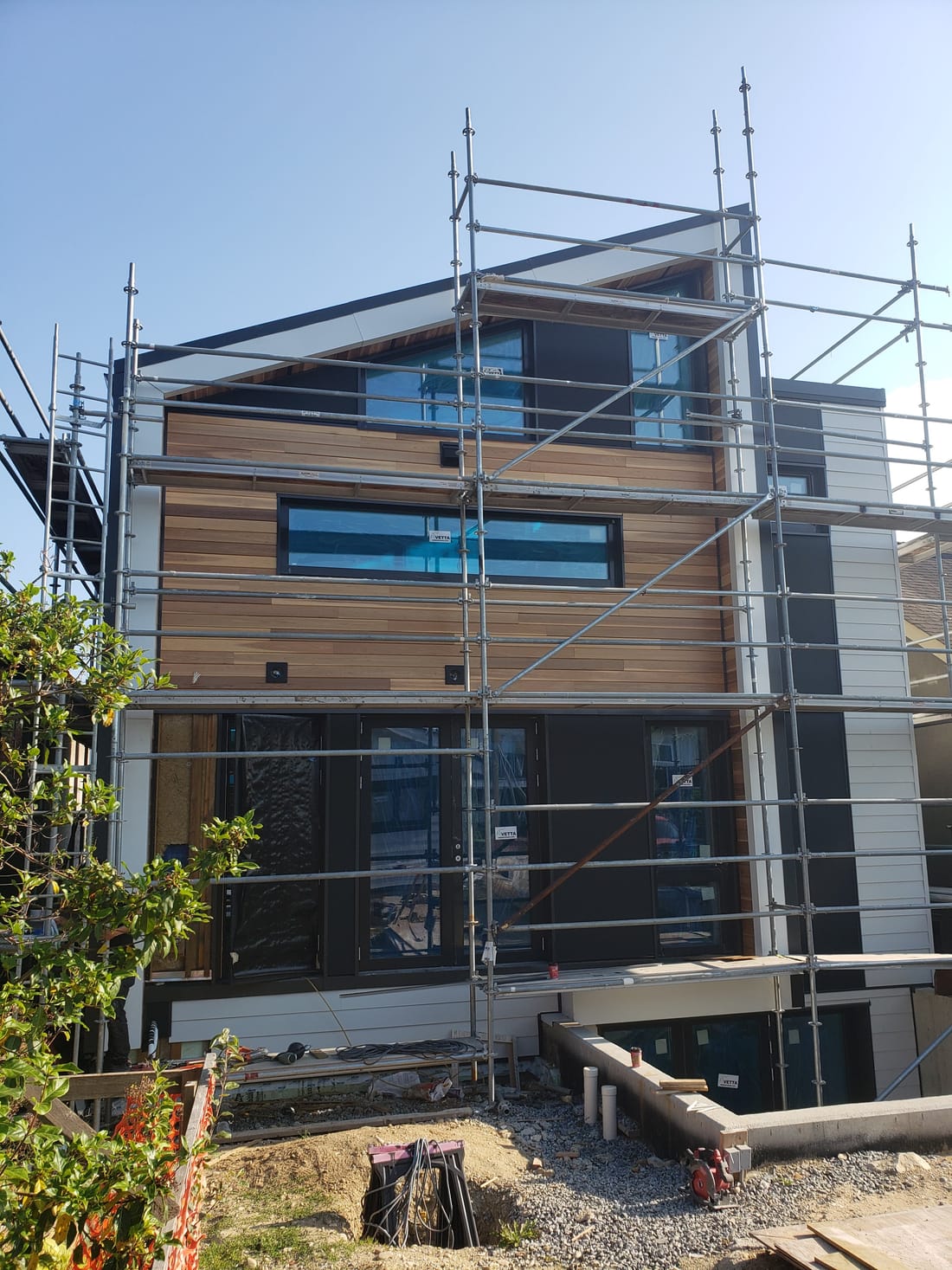
Most siding in BC lasts somewhere between twenty and fifty years, but the range within that spread is enormous. Vinyl commonly serves twenty to thirty years here, cedar twenty to forty depending on upkeep, fibre cement thirty to fifty, and metal panel systems can run longer still. The material matters, but so do installation quality, wall drainage and how the home is maintained through our long rainy seasons.
Why BC Is Its Own Category
The Lower Mainland delivers a specific kind of punishment: months of wind-driven rain, mild temperatures that keep walls damp instead of freeze-drying them, and shaded lots where moss and algae thrive. Materials rated for forty years in a dry climate can struggle to reach twenty-five here if the wall behind them cannot drain and dry. That is why lifespan conversations in this region always come back to two things at once: what the cladding is made of, and how well the assembly behind it manages water.
Lifespan by Material
Vinyl Siding: Roughly 20 to 30 Years
Vinyl siding handles rain well because it simply does not absorb water. What ages it is sunlight and brittleness. South and west walls fade first, and older panels become fragile enough that a winter windstorm or an errant ladder cracks them. In practice, most vinyl in the Lower Mainland is replaced not because it leaks but because it looks tired, has faded unevenly, or has accumulated enough cracked panels that patching no longer makes sense.
Cedar Siding: Roughly 20 to 40 Years, Maintenance Decides
Cedar siding has the widest range on this list, and the homeowner controls most of it. Cedar that is refinished on schedule, kept clear of soil and shrubs, and drained properly at every joint can serve for four decades. Cedar that loses its finish and stays wet through successive winters can show rot at the bottom courses in half that time. The wood itself is naturally decay-resistant, which is why it has clad coastal homes for generations, but resistance is not immunity.
Fibre Cement: Roughly 30 to 50 Years
Fibre cement products such as James Hardie siding were built for climates like ours. The material does not rot, does not interest insects or woodpeckers, and holds paint far longer than wood. Factory finishes carry long warranties, and the boards themselves typically outlast the first repaint cycle by decades. The main caveats are installation-related: fibre cement must be cut, flashed and clearanced correctly, because sloppy detailing at butt joints and penetrations lets water reach the sheathing regardless of how durable the boards are.
Engineered Wood: Roughly 20 to 35 Years
Engineered wood siding bonds wood strands with resins and waxes to resist moisture better than raw lumber while keeping a genuine wood-grain look. In BC it performs well when edges are sealed, clearances are respected and the finish is maintained. Its weak points are cut ends and bottom edges that were never resealed, which can swell after years of splash-back. Treat it like a lower-maintenance cousin of cedar rather than a maintenance-free product and it will reward you.
Metal and Aluminum Panels: Roughly 40 Years and Up
Metal panel systems resist everything our climate throws at walls: rain, UV, moss and pests. Finishes on quality panels are warrantied for decades, and the substrate beneath outlasts the finish. Failures tend to be mechanical, such as dents from impacts, or corrosion at scratches near marine exposure. These systems appear most often on commercial buildings and modern homes, where their long service life offsets a higher initial investment of budget and planning.
What Shortens Any Siding's Life
The same handful of conditions age every material on this list prematurely:
- Blocked drainage. Overflowing gutters soak walls from above, and pairing cladding work with sound gutters and downspouts protects the whole assembly.
- Ground contact and splash-back. Siding that runs too close to grade wicks moisture constantly.
- Failed caulking. Joints around windows, doors and penetrations fail years before the siding does, and every failed joint is a water entry.
- No rainscreen. Homes built before rainscreen requirements dry slowly, so any water that gets behind the cladding lingers.
- Deferred small repairs. A cracked board is cheap; the rot that spreads behind it is not.
Reading the End-of-Life Signals
Age alone should not drive a replacement decision. A thirty-year-old wall that drains well and shows only isolated wear may have another decade in it, while fifteen-year-old cladding over a leaking assembly may already be finished. Widespread cupping, repeated finish failure, soft spots on multiple walls and repairs that recur annually are stronger indicators than the calendar. When several of those appear together, it is time to compare the cost of continued patching against a planned replacement.
Installation quality deserves a final mention, because it quietly sets the ceiling on every range above. The same fibre cement board can serve fifty years over a well-built rainscreen or leak within ten over missing flashings. When you inherit a home and do not know how the walls were built, an assessment that looks behind the cladding tells you more about remaining life than the material's brochure ever will. Two homes with identical siding, built the same year, can sit decades apart in real condition.
For a full walkthrough of that decision, including how to evaluate materials side by side, see our homeowner's guide to siding repair and replacement in the Lower Mainland.
Get a Straight Answer on Your Walls
Berkana Construction Management assesses and replaces siding across Maple Ridge and the Lower Mainland. If you are wondering how many winters your cladding has left, call (672) 771-6868 or book an assessment and we will give you an honest read, whether the answer is ten more years or one.