
James Hardie
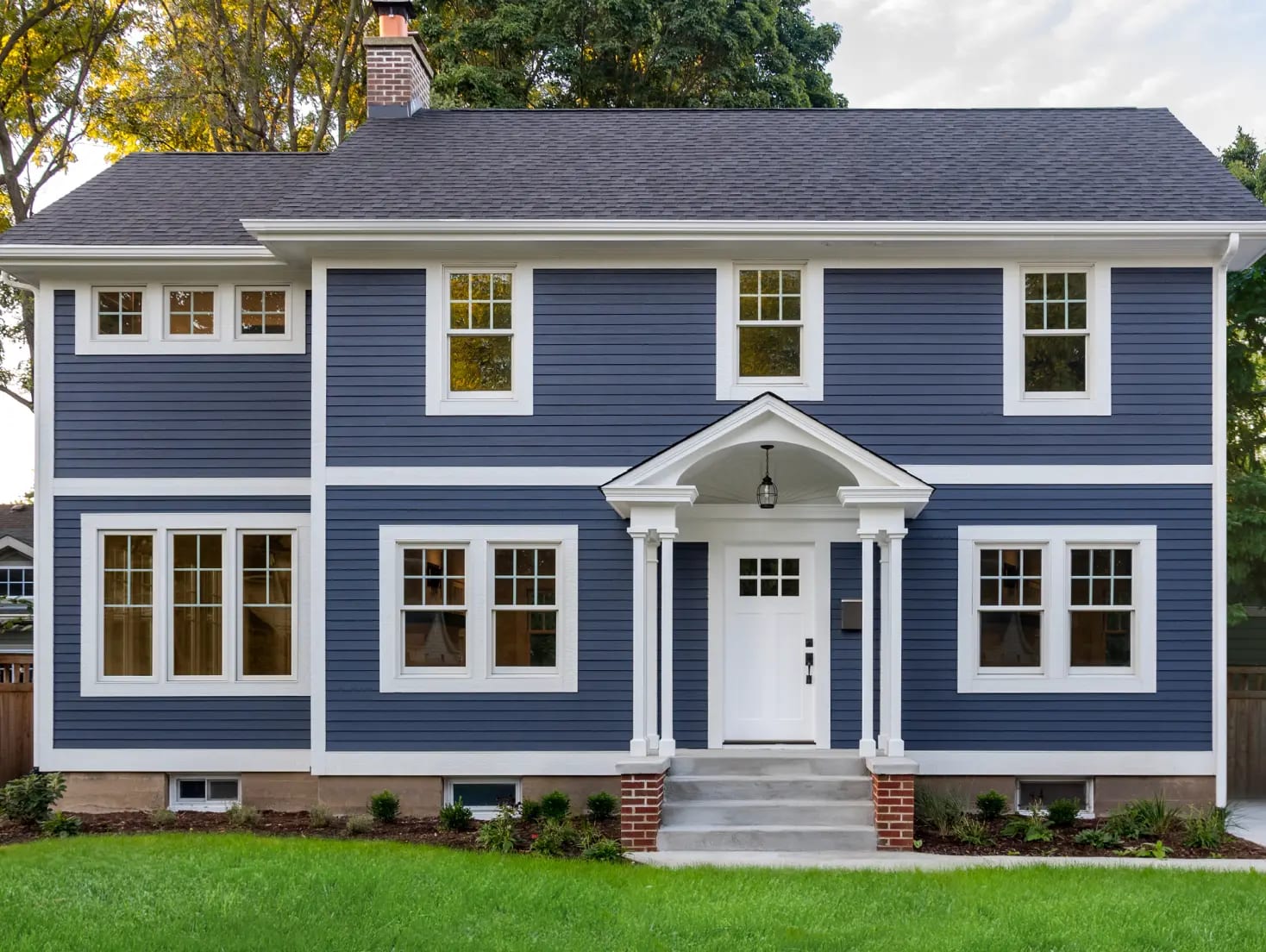
Hardie Plank lap siding, Hardie Panel and Hardie Shingle give Lower Mainland buildings a durable, fire-resistant exterior that shrugs off our rain. Berkana Construction installs James Hardie products to manufacturer requirements, protecting both the performance and the warranty.
What you are getting.
James Hardie fiber cement is the benchmark siding for coastal BC. It does not rot, burn or feed insects, holds paint far longer than wood and carries one of the strongest warranties in the industry. The catch is that it must be installed exactly to spec, with correct clearances, flashing and fastening, which is where an experienced installer earns their keep.
- Fiber cement: will not rot, warp or burn
- ColorPlus factory finishes or site paint
- Plank, panel and shingle profiles
- Engineered for wet coastal climates
- Strong manufacturer warranty coverage
- Installed to Hardie best practices
Where this material shines.
Family Homes
The default upgrade from vinyl or wood.
Townhomes & Strata
Durable, uniform multi-unit exteriors.
Modern Designs
Panel and board-and-batten looks.
Fire-Smart Rebuilds
Non-combustible cladding where it matters.
How we install it.
Profile and colour
Plank, panel or shingle, ColorPlus or primed, chosen with samples in hand.
Assembly prep
Weather barrier, rainscreen and flashing detailed to Hardie's published requirements.
Spec installation
Correct gapping, clearances, fastening and touch-up, documented as we go.
Services that use this material.
Siding
Complete siding services for houses, townhomes and commercial buildings: installation, repair and full replacement in every major cladding material.
Siding Installation
New siding installed on homes, additions and commercial buildings, in fiber cement, vinyl, cedar, engineered wood and modern panel systems.
Siding Repair
Cracked, loose, rotten or storm-damaged siding repaired and colour-matched, before small problems become water damage.
Siding Replacement
Full tear-off and replacement of aging or failing siding, with substrate repairs, modern weather detailing and your choice of material.
James Hardie: what Lower Mainland owners should know.
James Hardie Fibre Cement Siding for Lower Mainland Homes
Fibre cement has become the default recommendation for a huge share of re-siding projects in Maple Ridge, Coquitlam, Langley and across the Lower Mainland, and James Hardie is the name most homeowners hear first. The material is a compressed blend of cement, sand and cellulose fibre, cured into boards and panels that behave very differently from wood, vinyl or metal. It does not rot, it does not feed insects, it will not melt near a barbecue, and it holds paint far longer than lumber ever could. Those properties line up neatly with the demands of a coastal rainforest climate, which is why so much new construction in this region specifies it.
That said, fibre cement is not a forgiving product. It rewards careful installation and punishes shortcuts, and the difference between a twenty five year exterior and a ten year headache usually comes down to how the crew handled clearances, gaps and fasteners. This page walks through the Hardie product families, the finish options, the installation details that actually matter, and an honest comparison against the alternatives we also install.
The James Hardie Product Lines
James Hardie is not a single product. It is a family of profiles, and choosing among them shapes the character of the finished house.
HardiePlank Lap Siding
HardiePlank is the horizontal lap board most people picture. It comes in several widths and textures, including a smooth face and the Select Cedarmill woodgrain emboss. On a typical Lower Mainland home it reads as classic and understated, and it pairs well with shingle accents in gables.
HardiePanel Vertical Siding
HardiePanel is a large-format sheet used for vertical applications, either as board and batten with trim strips or as a clean panel look with expressed joints. It shows up often on modern infill homes and on garages and accent volumes where a change of direction breaks up the massing.
HardieShingle
HardieShingle reproduces the look of cedar shakes in straight-edge and staggered-edge formats. It is a popular choice for gable ends and dormers on character homes, delivering the coastal shingle aesthetic without the maintenance cycle that real cedar demands.
Artisan Collection
The Artisan line is a thicker, more sculpted board with deeper shadow lines and mitred corner options. It costs more and weighs more, but on architect-driven projects the extra depth is visible from the street and reads closer to true timber siding than standard lap board does.
ColorPlus Versus Primed: Two Ways to Finish
Hardie products arrive in one of two states. ColorPlus boards are finished at the factory with multiple baked-on coats of colour applied in controlled conditions, then cured before shipping. Primed boards arrive ready for site painting after installation.
ColorPlus gives you a consistent, durable finish with a colour warranty behind it, and touch-up kits handle the small nicks that happen during handling. The trade-off is a fixed palette. If your project needs a custom colour, or you want the trim, soffit and siding sprayed as one continuous system, primed board with a quality site-applied acrylic gives you complete freedom. Both routes are legitimate. We quote them side by side so you can weigh finish flexibility against factory consistency.
Why the Installation Spec Matters More Than the Board
Every fibre cement failure we get called to inspect traces back to installation, not to the material. James Hardie publishes detailed installation requirements, and the boards only perform as designed when those requirements are followed.
Clearances
Fibre cement must be held clear of anything that stays wet. That means roughly six inches above finished grade, about two inches above decks, patios and roofing, and a deliberate gap above horizontal flashings so water can drain and the board edge can dry. Boards run tight to a deck surface will wick moisture through the cut edge, and the paint film there fails first. When we see swollen, flaking board bottoms on an otherwise sound wall, missing clearances are almost always the cause.
Gapping and Joints
Butt joints, trim intersections and penetrations all need to be treated exactly as the manufacturer details them, with joint flashing or sealant as specified. Cut edges should be primed. Sloppy joints let coastal rain reach the substrate behind the cladding, which defeats the point of choosing a durable material in the first place.
Fastening
Fasteners must be corrosion resistant, driven snug rather than overdriven, and placed at the specified edge distances. An overdriven nail crushes the board and creates a weak spot; an underdriven one telegraphs through the finish. Blind nailing, face nailing and wind-zone fastening schedules all differ, and a crew that installs fibre cement occasionally tends to blur those distinctions. Our siding installation process builds these checks into every wall before anything gets covered up.
Performance in Coastal Rain and Around Fire
The Lower Mainland delivers long wet winters, wind-driven rain off the Fraser Valley, and increasingly hot, dry stretches in summer. Fibre cement handles both ends of that range well. The board itself is dimensionally stable when wet, so it does not swell, cup or warp the way wood products can, and installed over a proper rainscreen it gives the wall assembly room to drain and dry between storms.
On the fire side, fibre cement is non-combustible as a material. It will not ignite from embers or add fuel to a fire, which matters for homes backing onto greenbelt and forested slopes in Maple Ridge and Mission. It is also unbothered by reflected heat from windows or a neighbour's barbecue, situations that can distort vinyl.
The Warranty Position
James Hardie backs its substrate with a thirty year non-prorated limited warranty, which is unusual in cladding. Non-prorated means the coverage does not shrink year by year, so the protection in year twenty five is the same as in year one. ColorPlus finishes carry their own separate finish warranty. As with any manufacturer warranty, coverage assumes the product was installed to spec, which is one more reason the installation details above deserve attention.
How Hardie Compares to Vinyl and Engineered Wood
Against vinyl siding, fibre cement wins on rigidity, fire performance, impact feel and paintability, and it looks more like real wood at close range. Vinyl wins on upfront cost, lighter weight and a truly paint-free surface. A vinyl wall never needs recoating; a site-painted Hardie wall will want fresh paint on a long but real cycle.
Against engineered wood siding, the comparison is closer than many people expect. Engineered wood is lighter, cuts like lumber, and installs faster, and modern treatment packages resist rot and insects well. Fibre cement counters with non-combustibility and complete immunity to moisture swelling. Engineered wood is still a wood product at its core, and in our climate its edge sealing and flashing details carry the same weight that clearances carry for Hardie.
Where Fibre Cement Falls Short
Honesty matters here. Fibre cement is heavy, which makes it slower to install and harder on crews. It is brittle before it goes on the wall, so handling and cutting demand care, and cutting generates silica dust that requires proper dust control. It costs more installed than vinyl. And while the material shrugs off moisture, the paint film on site-finished board is still paint and will eventually need renewal. If a project is being resided on a tight budget, we will say plainly when premium vinyl or engineered wood delivers better value, and a full siding replacement quote from us prices the options against each other rather than pushing one brand.
Is Hardie Right for Your Home?
If you plan to stay in your home for the long haul, live near trees or greenbelt, want a painted-wood look without wood upkeep, or are replacing a failed exterior and never want to do it again, fibre cement deserves a hard look. Berkana Construction Management has been installing it across the Lower Mainland since 2019, alongside seven other cladding systems, so our recommendation comes from comparing materials daily rather than selling a single line.
Talk Through Your Project
If you are weighing James Hardie against other options for a home anywhere in the Lower Mainland, call Berkana Construction Management at (672) 771-6868. We will look at your walls, explain what the installation should include, and give you a side by side quote so the decision is yours to make. You can also reach us here to book a site visit.
Common questions, james hardie.
Get a free written quote.
Tell us about your building and what you have in mind. We respond within one business day to book a free site visit, then follow up with a clear, line-itemed quote.