
Cedar vs Engineered Wood Siding: A Lower Mainland Comparison
Cedar and engineered wood siding compared for coastal BC: appearance, moisture behaviour, upkeep cycles and lifespan, so you can pick with confidence.
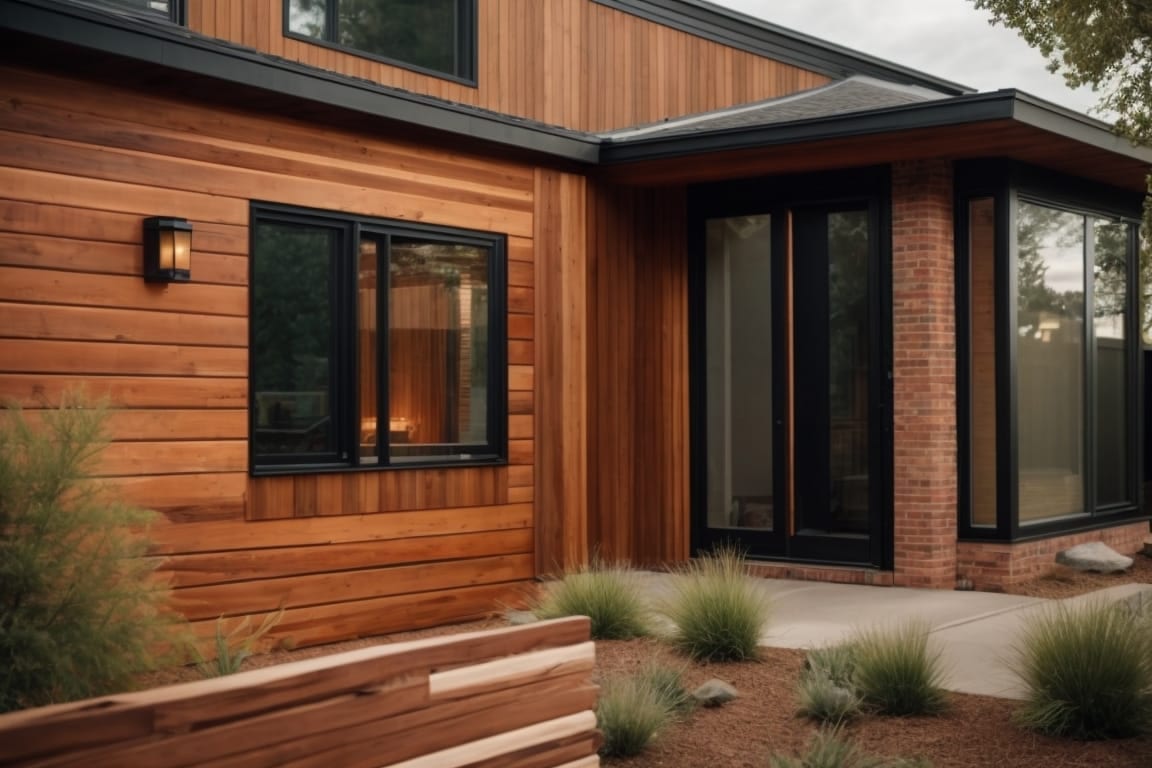
Cedar offers natural beauty and a heritage feel but demands regular refinishing to survive coastal BC's wet winters. Engineered wood siding delivers a similar painted wood appearance with more dimensional stability, factory primed or prefinished surfaces and longer maintenance intervals. If you love a natural stained grain and will keep up the upkeep, cedar rewards you; if you want the wood look with fewer obligations, engineered wood is the practical pick for the Lower Mainland.
Two Kinds of Wood on the Wall
This comparison is not wood versus plastic. Both materials come from trees. The difference is how the wood arrives at your wall.
Cedar siding is sawn directly from western red cedar, a species this coast has built with for generations because its natural oils resist decay better than most softwoods. Every board is unique, with grain, knots and colour variation that no factory reproduces.
Engineered wood siding starts as wood strands or fibre bonded with resins and wax, pressed into dense, uniform boards, then wrapped in a resin saturated overlay that takes paint exceptionally well. Think of it as wood re-engineered to remove the variability: no knots, no cupping prone grain, consistent density from board to board.
Appearance: Character Versus Consistency
Cedar's appeal is authenticity. A clear or semi transparent stain shows real grain, and the material ages into a patina that many owners of character homes actively want. Channel, bevel and board profiles all carry the coastal vernacular that fits older Maple Ridge and Vancouver neighbourhoods naturally.
Engineered wood aims for the crisp, uniform look of a freshly painted wood wall, and holds that look. The embossed texture is convincing at viewing distance, boards are straight and defect free, and long lengths mean fewer butt joints on big walls. If your target look is painted lap siding or board and batten in a solid colour, engineered wood gets there with less sorting, culling and waste than natural lumber.
The honest dividing line: if you want to see actual grain through a translucent finish, only cedar does that. If you plan to paint anyway, the argument for cutting cedar's premium fades quickly.
Moisture: The Coastal Question
Every material conversation in this region eventually arrives at water.
How cedar behaves
Cedar absorbs and releases moisture with the seasons, swelling in winter and shrinking in summer. Good installation manages this with proper fastening, back priming and a ventilated rainscreen cavity behind the boards. The vulnerability is the finish: once stain or paint fails and stays failed, repeated wetting leaches the wood's natural extractives, opens surface checks and eventually invites decay in the wettest spots such as bottom courses, joints and anywhere splash back keeps the wall damp.
How engineered wood behaves
The resin and wax treatment slows moisture uptake dramatically, and the factory applied overlay or finish is more uniform than anything applied on site. Engineered wood still respects the rules of wet climate detailing: sealed cut ends, correct clearances from grade and roofing, and a drained cavity behind the cladding. Where early generations of composite siding earned a poor reputation decades ago, current products have long track records in wet markets precisely because the manufacturers engineered for this failure mode.
In both cases, the assembly matters as much as the material. A rainscreened wall with disciplined flashing will keep either product healthy; a face sealed wall will eventually punish both.
Maintenance: The Deciding Factor for Many Owners
Here is where the two paths genuinely diverge.
Cedar in coastal BC is a relationship. Stained finishes typically want renewal every three to five years, weather facing walls sooner. Skip a cycle and the cost of recovery grows, because failed finish means surface preparation, brightening or sanding before new stain goes on. Owners who enjoy the ritual, or who budget for professional exterior painting and staining on schedule, keep cedar looking remarkable for decades.
Engineered wood asks much less. Factory prefinished boards carry finish warranties measured in decades, and even site painted product holds paint longer than natural lumber because the surface is uniform and dimensionally stable. The routine is an annual rinse, a caulking check and repainting on roughly the schedule you would expect for quality paint on a stable substrate.
Durability and Repair
Cedar is soft. It dents, woodpeckers like it, and individual boards split when stressed. The offsetting virtue is repairability: a carpenter can replace a single board invisibly, and matching material is always available.
Engineered wood is harder faced and resists impact better, and damaged boards are likewise replaceable one at a time. Colour matching prefinished product years later can take a little more planning, which is a reason to keep spare boards from the original installation.
For a full picture of how material choice fits into the repair or replace decision, our homeowner's guide to siding repair and replacement covers the framework in depth.
Which Should You Choose?
Choose cedar if:
- You want a natural or semi transparent stained finish that shows true grain
- The home's character or neighbourhood context calls for authentic material
- You are committed to the refinishing rhythm this climate imposes
Choose engineered wood if:
- Your target look is painted siding in a solid colour
- You want longer intervals between maintenance rounds
- Consistent, defect free boards and long lengths suit the design
Both belong on our materials shortlist for the region, and both perform well over a properly built rainscreen.
Berkana Construction Management installs cedar and engineered wood siding throughout Maple Ridge and the Lower Mainland. Call (672) 771-6868 or book a consultation to see samples of each side by side and talk through what your walls actually need.