
Fiber Cement vs Vinyl Siding: The Long-Term Ownership Math
Fibre cement and vinyl siding compared over decades of ownership: lifespan, maintenance cycles, repaint intervals and weather resistance in coastal BC.
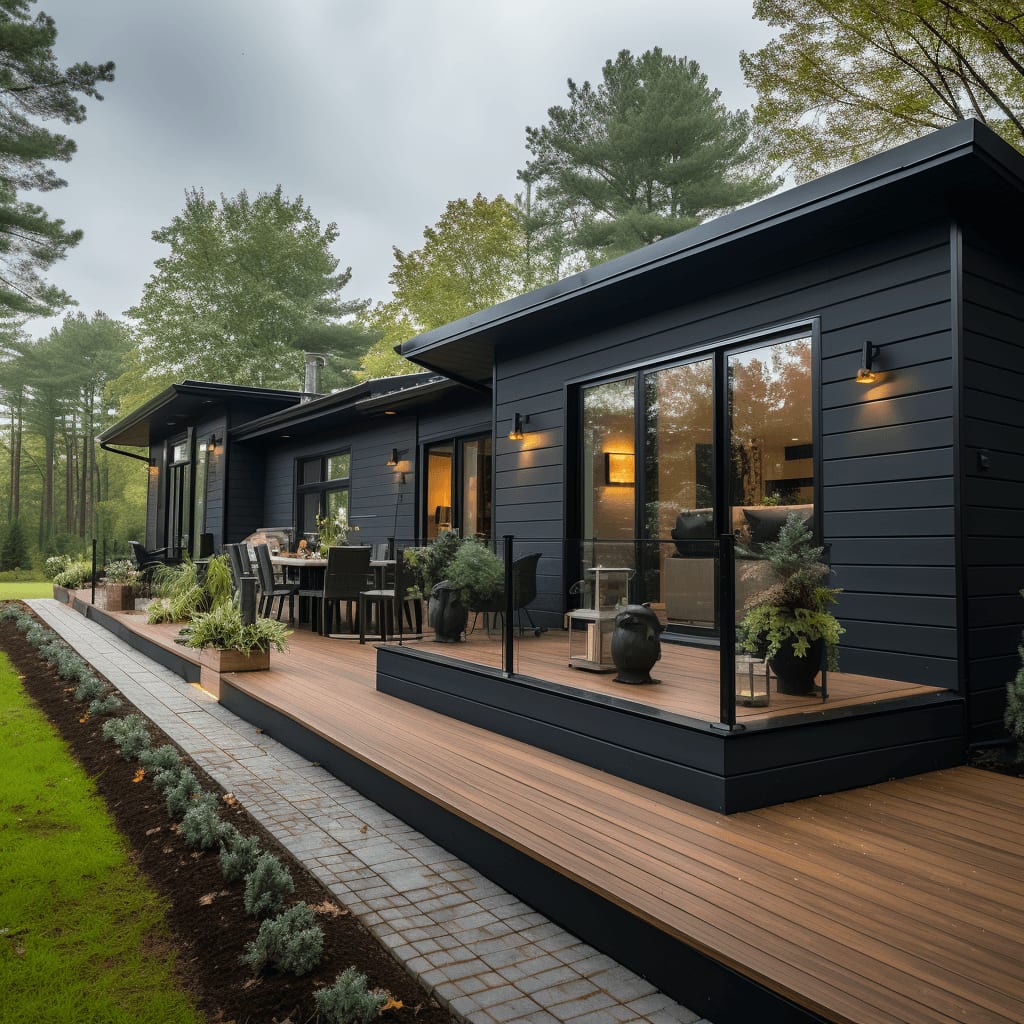
Vinyl siding wins on initial simplicity: no painting, easy washing, decades of low involvement service. Fibre cement wins on longevity and appearance over the long haul: a harder, fire resistant board that holds crisp detail, takes repainting indefinitely and typically outlasts a vinyl installation by a wide margin in coastal conditions. The ownership math comes down to how long you will keep the home and how much you value how it looks in year twenty.
Thinking in Decades, Not Invoices
A siding decision is easiest to see clearly when you stop comparing products at the moment of installation and start comparing the ownership timeline each one sets in motion. Two identical houses in Maple Ridge, one clad in each material, will have very different maintenance calendars and very different street presence by the time their owners retire. This article compares those timelines on lifespan, upkeep cycles, weather performance and end of life, without a price tag in sight, because the structural differences are what actually decide satisfaction.
Round One: Service Life
Vinyl panels in this climate typically deliver twenty to thirty years of service. The material does not rot and never needs paint, but it ages in one direction: UV exposure slowly mutes the colour, plasticizers leave the material over time, and older panels become brittle enough that a stray hit from a lawnmower stone or an errant ladder cracks them. Windstorms are the other clock; as panels age and fastening loosens, our fall storms find the weak laps first.
Fibre cement boards, being cement, sand and cellulose, do not become brittle with UV and do not melt, warp or burn. Substrate warranties commonly run thirty years, and correctly installed walls routinely serve well past that. The finish is the layer that ages, and unlike vinyl's colour, it is renewable: repainting restores the wall to day one appearance for another cycle.
Over a fifty year horizon, that difference compounds. A vinyl wall likely gets replaced entirely at least once in that window. A fibre cement wall likely gets repainted two or three times instead, keeping the same boards throughout.
Round Two: The Maintenance Calendar
Vinyl's calendar is famously light. An annual or semi annual wash keeps algae and grime off, caulking at penetrations gets checked like any wall, and cracked panels get swapped when they happen. There is no repaint interval because there is no paint. The catch is that there is also no reset button: a twenty year old vinyl wall looks like a twenty year old vinyl wall, and matching replacement panels to faded originals gets harder every year.
Fibre cement's calendar carries one significant recurring event: repainting. Factory finished boards, such as ColorPlus on James Hardie siding, hold their colour for many years before a refresh enters the conversation, and site painted boards typically want repainting on the schedule quality exterior paint achieves on a dimensionally stable substrate, which is a long interval compared to wood. Between repaints, the routine matches vinyl: washing and caulk inspection. The repaint is a genuine cost and disruption to plan for, and it is also an opportunity, since the house can change colour completely mid life.
Round Three: Coastal Weather Performance
Both products tolerate rain well when installed over the drained rainscreen assembly that BC construction practice requires; neither rots. The separations show elsewhere:
- Wind: Interlocked vinyl panels can unzip in strong gusts, especially as they age. Face nailed fibre cement planks hold on through the storms that generate repair calls across the region every November.
- Impact: Hail, gravel and hockey pucks dent the odd fibre cement board but crack brittle vinyl outright.
- Heat and fire: Vinyl distorts near barbecues and reflective windows and melts in fire exposure. Fibre cement is noncombustible, a growing consideration as wildfire smoke seasons remind the region that fire risk is not only an Interior problem.
- Appearance under weather: Fibre cement's thicker profile throws deeper shadow lines and its rigidity resists the subtle waviness that can telegraph through vinyl on long walls.
Round Four: End of Life and Flexibility
When vinyl reaches the end, the path is full siding replacement, and the moment often arrives on the storm's schedule rather than the owner's. When fibre cement's finish reaches the end of a cycle, the path is exterior painting, a much smaller intervention that doubles as a style refresh. Fibre cement also keeps its options open for future owners: an inspector probing a fifty year old Hardie wall finds sound board, which supports resale conversations in a way aged plastic cladding does not.
So Which Math Wins?
Choose vinyl when the priority is a clean, respectable exterior with minimal involvement, on a home you may not hold for decades, or on secondary buildings and rental properties where simplicity rules. It remains a legitimate, code compliant, widely used choice, and our vinyl siding page covers the current product generation.
Choose fibre cement when you are siding the home you intend to keep, when fire resistance and storm resilience matter to you, or when you want the exterior still earning compliments in its third decade. For the fuller decision framework, including when repair beats replacement entirely, see our siding repair and replacement guide for the Lower Mainland.
Berkana Construction Management installs both materials across Maple Ridge and the Lower Mainland and will give you a straight recommendation for your specific house. Call (672) 771-6868 or request an assessment to run the ownership math on your own walls.