
Vinyl
For rental properties, budget-conscious re-sides and clean simple exteriors, vinyl is hard to beat. Berkana Construction installs premium vinyl lines with the straight coursing and tight trim work that make the difference between cheap-looking and sharp.
What you are getting.
Vinyl remains the most cost-effective siding you can put on a building, and today's premium lines are thicker, straighter and better-looking than the vinyl of twenty years ago. Installed with correct expansion gapping and quality trim, it delivers decades of low-maintenance service for the lowest cost per wall.
- Premium thicker-gauge panels
- Wide colour and profile selection
- Lowest cost per square foot
- Minimal maintenance, no painting
- Insulated vinyl options
- Fast installation timelines
Where this material shines.
Rental Properties
Durable exteriors at controlled cost.
Budget Re-Sides
The most exterior for the least money.
Starter Homes
Clean look with low upkeep.
Outbuildings
Garages and shops matched to the house.
How we install it.
Panel selection
Gauge, profile and colour chosen from current premium lines.
Prep
Barrier, flashing and straight strapping, because vinyl telegraphs every wave underneath.
Install
Correct expansion gapping and hemmed trim so panels move without buckling or rattling.
Services that use this material.
Siding
Complete siding services for houses, townhomes and commercial buildings: installation, repair and full replacement in every major cladding material.
Siding Installation
New siding installed on homes, additions and commercial buildings, in fiber cement, vinyl, cedar, engineered wood and modern panel systems.
Siding Repair
Cracked, loose, rotten or storm-damaged siding repaired and colour-matched, before small problems become water damage.
Siding Replacement
Full tear-off and replacement of aging or failing siding, with substrate repairs, modern weather detailing and your choice of material.
Vinyl: what Lower Mainland owners should know.
Premium Vinyl Siding: A Practical Case for a Misjudged Material
Vinyl siding carries baggage. Most people's mental image was formed by thin, wavy, chalk-faded panels installed on subdivisions decades ago, and that image is out of date. The vinyl we install today across the Lower Mainland is a different product: thicker, stiffer, better locked, available in deeper colours, and engineered with an understanding of thermal movement that the early generations lacked. It remains the least expensive cladding we offer, and for a large group of homeowners, rental owners and strata buildings, it is genuinely the rational choice rather than the compromise.
This page explains what separates premium panels from commodity vinyl, walks through profiles and colour technology, covers insulated vinyl, digs into the expansion and contraction behaviour that governs correct installation, and is direct about the material's limits, because vinyl has real ones and pretending otherwise helps nobody.
What Makes Modern Vinyl Different
Panel Thickness and Rigidity
The single clearest quality marker in vinyl is gauge. Builder-grade panels are noticeably thinner than premium lines, and that difference shows up on the wall as oil-canning, waviness between studs, and a hollow feel when you press on it. Thicker premium panels resist sagging in summer heat, hang straighter, and survive the odd knock from a wheelbarrow or soccer ball far better. Many premium lines also add a rolled or folded nailing hem that stiffens the panel and improves wind hold.
Locking and Wind Performance
Modern panel locks engage more positively than old designs, which matters in the outflow winds that funnel through the Fraser Valley every winter. A properly locked and fastened premium panel wall handles significant wind loads. Cheap vinyl unzipping in a storm gave the whole category a reputation that better products do not deserve.
Colour Through and Colour Fast
Vinyl colour runs through the material, so a scratch does not expose a different shade the way a chipped painted surface does. Fade resistance has improved substantially with modern capstock formulations, and darker shades, once forbidden because heat absorption distorted the panels, are now offered by several manufacturers in heat-managed formulations. That said, dark vinyl still requires more care in product selection and siting than light vinyl, and we advise on that honestly during quoting.
Profiles and Textures
Vinyl reproduces most traditional siding looks. Horizontal lap comes in single, double and triple course panels with various reveal widths. Dutch lap adds a shadow groove that reads more dimensional in low sun. Vertical board and batten panels have improved and now carry the farmhouse look convincingly at a distance. Shake and shingle panels cover gables economically. Woodgrain embossing is standard on most lines; smooth-face panels suit more contemporary tastes. Matching trim, corner posts, and fascia accessories complete the system so the whole exterior can be wrapped in coordinated, low-upkeep material.
Insulated Vinyl: The Category's Quiet Upgrade
Insulated vinyl laminates a contoured rigid foam backer to the panel. The foam does three jobs. It adds continuous insulation value over the wall, useful on older Lower Mainland homes with modest cavity insulation, and it pairs naturally with a broader exterior insulation strategy. It stiffens the panel dramatically, eliminating most of the flex and hollowness people dislike about vinyl. And it improves impact behaviour, because the panel is supported continuously instead of spanning between contact points. Insulated vinyl costs more and installs differently, but it is the version of vinyl we find ourselves recommending most often to owners who like the economics but hesitate on feel.
Expansion, Contraction and Why Vinyl Must Hang Loose
Here is the technical heart of vinyl installation, and the source of most vinyl failures we are asked to fix. Vinyl moves with temperature far more than wood, fibre cement or metal. A long panel can change length noticeably between a cold January night and a hot July afternoon. The entire installation system is designed around that movement.
Panels are meant to hang on their fasteners, not be pinned by them. Nails are driven in the centre of the slots and left a touch proud so the panel can slide. Panel ends need a deliberate gap inside receiving trims, wider for winter installs, so summer expansion has somewhere to go. Cut a panel tight and nail it home and the maths does not go away: the panel buckles outward in heat because it has no room to grow. Ripples, waves and popped locks on a vinyl wall are almost never a product defect. They are a crew that treated vinyl like wood. Our siding installation standards treat gapping and loose nailing as non-negotiable checkpoints, because no material is more sensitive to them.
The Honest Limits of Vinyl
Vinyl has boundaries, and knowing them is part of buying it well.
Impact
Premium gauges resist everyday knocks, but vinyl remains the most puncture-prone cladding we install, especially in cold weather when the material is brittle. A misdirected line trimmer or an errant hockey puck can crack a panel. The saving grace is that individual panels unzip and replace inexpensively, so damage is cheap to fix even if it is easier to cause.
Radiant Heat
Vinyl softens at temperatures a barbecue positioned against a wall, or sunlight concentrated by a neighbour's energy-efficient window, can genuinely produce. We have seen melted panels from both. Placement of grills matters, and where window reflection is a known issue on a site, we flag it before installing.
Fading and Repair Matching
Modern fade resistance is good, not eternal. A panel replaced ten years in will read slightly fresher than its weathered neighbours. Keeping a box of leftover panels in the garage is the cheapest insurance a vinyl owner can buy.
Fire
Vinyl is a thermoplastic. It melts and burns in a way fibre cement and metal simply do not, which is worth weighing for homes tight against forested slopes.
Where Vinyl Delivers Real Value
Vinyl earns its keep in clear situations: rental properties and secondary suites where upkeep budgets are thin, families stretching to cover a full siding replacement after discovering rot, stratas needing uniform, durable cladding across many units, and owners who simply want a clean exterior they never have to paint. Washing with a hose and soft brush once a year is the entire maintenance program. Against James Hardie fibre cement, vinyl concedes fire performance, rigidity and close-up realism, but it counters with lower cost, faster installation and zero repainting for the life of the wall. There is no shame in that trade. Half of good contracting is matching the material to the owner's actual priorities, and Berkana Construction Management quotes vinyl beside its alternatives so the comparison is transparent rather than rhetorical.
Colour and Curb Appeal Without the Upkeep
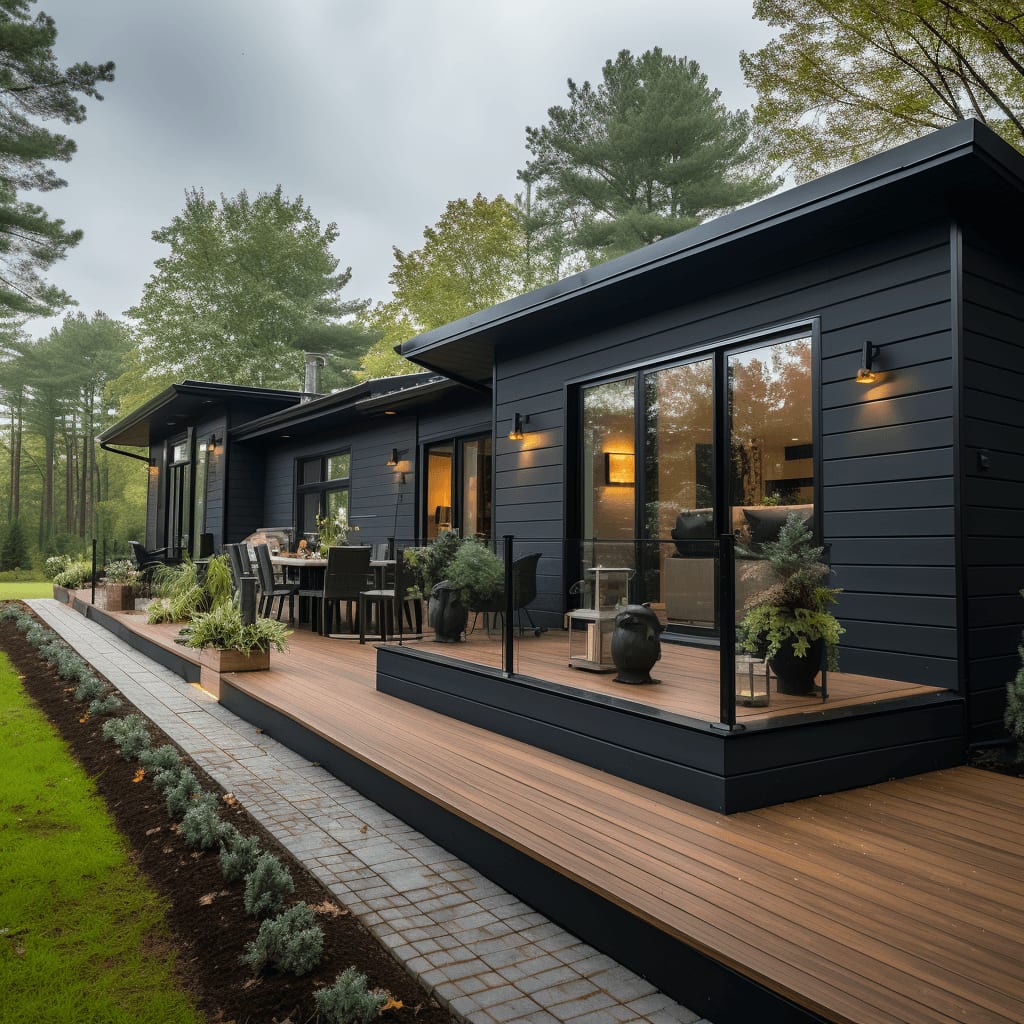
The current vinyl palette surprises people. Deep charcoals, navy tones, sage greens and warm clay shades have joined the traditional whites and creams, and paired with crisp white trim and modern board and batten accents, a well-designed vinyl exterior photographs remarkably like its costlier neighbours. We help owners across the Lower Mainland assemble combinations that suit their street and their architecture rather than defaulting to beige.
Living With a Vinyl Exterior
Ownership is where vinyl repays its buyers. The annual care routine is a garden hose, a soft brush and a bucket of mild soapy water, worked bottom to shed streaks, and even that is optional in a climate where winter rain does most of the rinsing for you. There is no caulking schedule around the panel field, no finish to monitor, and no fastener heads to rust and bleed. When damage does occur, a repair carries none of the drama of other claddings: a zip tool releases the lock on the affected course, the cracked panel slides out, and a replacement snaps in within minutes. That is also why we suggest ordering a spare bundle with every installation and storing it flat and shaded, so future repairs draw from the same production run and the same weathering start date as the wall around them.
Get a Straight Answer on Vinyl
If you are weighing premium vinyl against other claddings for a home or building anywhere in the Lower Mainland, Berkana Construction Management will give you the unvarnished version: where vinyl wins, where it does not, and what correct installation looks like. Serving the region from Maple Ridge since 2019. Call (672) 771-6868 for a side by side quote.
Vinyl near you.
Dedicated vinyl pages for the cities where we do this work most, each covering the local housing stock, climate exposure and common questions.
Common questions, vinyl.
Get a free written quote.
Tell us about your building and what you have in mind. We respond within one business day to book a free site visit, then follow up with a clear, line-itemed quote.