
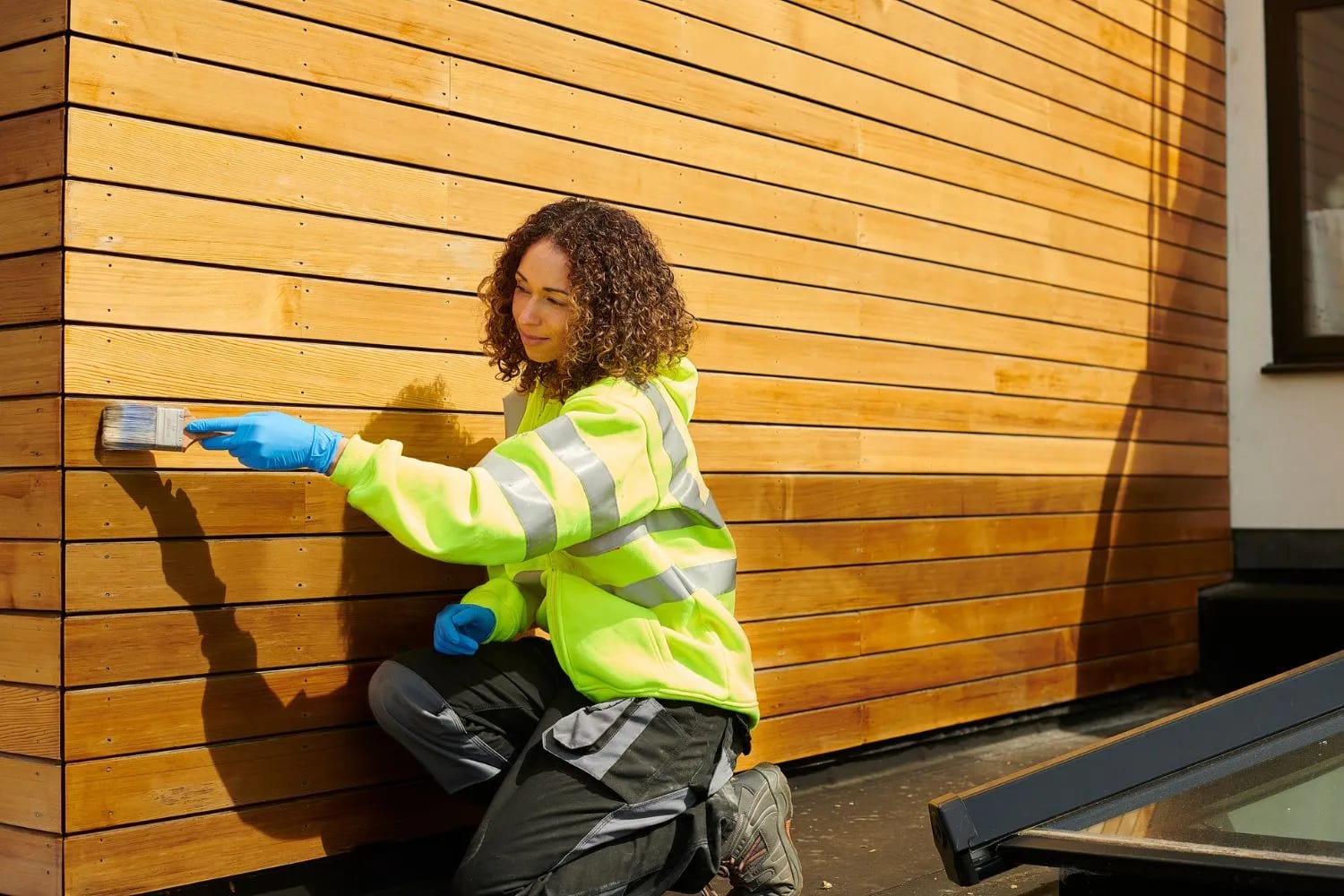
Exterior Painting
A quality repaint refreshes an exterior for a fraction of replacement cost, when the underlying siding is still sound. Berkana Construction paints and stains exteriors across the Lower Mainland, with the prep work that makes coatings last.
What we deliver.
In this climate, paint fails from the substrate out: trapped moisture, chalky old coatings and skipped prep will peel the most expensive paint in a season or two. Our exterior painting starts with washing, scraping, repairs and priming, and we tell you honestly when a surface is past painting and should be replaced instead.
- Pressure washing and full prep
- Scraping, sanding and priming
- Caulking and minor repairs included
- Fiber cement, wood and stucco coatings
- Cedar staining and oiling
- Honest paint-or-replace advice
Projects we take on.
Full Repaints
Whole-home colour refreshes.
Cedar Refinishing
Stain and oil maintenance cycles.
Trim & Accents
Doors, trim and feature elements.
Pre-Sale Refresh
Curb appeal before listing.
From first call to final walkthrough.
Surface assessment
We check what the existing coating is doing and whether the substrate underneath is worth painting.
Preparation
Wash, scrape, sand, repair, caulk and prime. Prep is most of the job and we do not skip it.
Coating
Premium exterior coatings applied in the right conditions, with clean lines and protected landscaping.
Pick the right cladding.
James Hardie
Fiber cement siding engineered for wet climates: fire resistant, rot proof and warranted for decades, installed to Hardie spec.
Cedar
Natural Western Red Cedar bevel, channel and shingle siding, installed with the detailing that keeps wood beautiful in a wet climate.
Vinyl
The budget-friendly workhorse: modern premium vinyl installed correctly, with straight lines, proper gapping and clean trim.
AL13 Panels
Architectural aluminum panel system with clean modern lines, non-combustible and engineered for fast, precise installation.
Exterior Painting: what Lower Mainland owners should know.
Paint gets judged on the day it dries and fails on a schedule set years earlier, during prep. That is the uncomfortable truth of exterior coatings in coastal British Columbia. The colour on the brush is the easy part. Whether that colour is still bonded to your walls after five wet winters comes down to washing, scraping, sanding, and priming, the work nobody photographs.
As exterior contractors, we come at painting from the wall side rather than the brush side. We know what is under the coating, how each substrate holds paint differently, and, just as important, when a house has reached the point where another repaint is money poured into siding that is already finished. This page walks through all of it: preparation, substrate by substrate technique, cedar staining, realistic coating lifespans on the coast, colour selection, and the repaint versus replace decision.
Prep Is the Real Work
On a properly run exterior painting project, application is the shortest phase. Everything before it determines the outcome.
Washing
Every exterior in this region carries a biological load: algae on shaded north walls, mildew under eaves, moss spores, plus the general film of traffic dust and pollen. Paint applied over any of that is bonding to the contamination, not the wall. We wash first, using appropriate pressure for the substrate, high enough to clean, low enough to avoid driving water into joints or furring wood grain, with mildewcide where growth is established. Then the building dries. In this climate, drying time is a scheduling discipline, not an afterthought; coating a wall whose moisture content is still elevated is a guarantee of blistering and peel.
Scraping, Sanding, and Repair
Failed coating comes off. All of it that is loose, feathered back to edges that hold. Glossy surfaces get scuffed so the new coat can key in. This is also the stage where a painting project run by an exterior contractor diverges from one run by a painting-only outfit: as we scrape, we probe. Soft wood at trim ends, corner boards punky at their bases, hairline splits in panels, these get flagged and fixed, because paint over rot is a disguise, not a repair. Where damage is localized, targeted siding repair happens before any primer is opened. Filling, patching, and re-nailing loose boards rounds out this phase.
Priming
Primer is not thin paint. It is a bonding and sealing layer with jobs of its own: sealing porous or weathered surfaces so topcoats cure evenly, blocking tannin bleed on cedar, giving chalky old paint something to grip, and protecting bare wood the moment it is exposed. Spot priming every scraped area and full priming any heavily weathered elevation is standard practice for us. Skipping primer to save a day is the classic false economy of exterior painting.
Painting Different Substrates
A house is rarely one material. Walls, trim, fascia, and accents each hold coatings in their own way, and treating them identically is how projects fail unevenly.
Fibre Cement
Fibre cement is the friendliest painting substrate on any exterior. It is dimensionally stable, so it does not stretch and crack coatings the way wood does, and it holds acrylic paint for a long time. Factory finished products such as James Hardie siding with baked on colour eventually reach an age where owners want a change, and repainting them is straightforward: wash, scuff, quality exterior acrylic. Field painted fibre cement follows the same path. The one discipline that matters is caulking, keeping joints and butt ends sealed with a paintable, flexible sealant, because the panel is only as protected as its cut edges.
Wood
Wood moves. It swells through the wet season and shrinks in summer, and every coating on it must flex with that cycle. Quality hundred percent acrylic paints have largely displaced oils for wood topcoats precisely because they stay elastic. Preparation carries extra weight here: wood that has greyed from ultraviolet exposure has a degraded surface layer that must be sanded to sound fibre, or the paint bonds to dead cells that slough away. End grain, the bottoms of boards, trim joints, all drink water and deserve particular priming attention. Done right, painted wood is beautiful and durable. Done casually, it is an every three years commitment.
Stucco
Stucco fails differently. The problems are hairline cracking, chalking, and trapped moisture. Coating it calls for masonry appropriate products, elastomeric or high build acrylics that bridge fine cracks and, critically, remain vapour permeable so the wall can dry through the coating. Sealing a damp stucco wall under a non breathable film is how you get sheets of paint delaminating with the outer skin of stucco attached. Cracks get routed and filled before coating, and any stucco that sounds hollow when tapped gets investigated, not painted.
Staining and Oiling Cedar
Cedar deserves its own discussion because it is the signature cladding of this region and because the finishing logic differs from paint entirely. Film forming coatings sit on the surface; penetrating stains and oils go into the wood.
Transparent and semi transparent stains preserve the grain character that people choose cedar siding for in the first place. They fail gracefully, eroding gradually rather than peeling, which makes maintenance a matter of cleaning and recoating rather than stripping. The trade off is frequency: penetrating finishes on weather exposed elevations need renewal more often than paint. Solid colour stains split the difference, behaving more like thin paint while still shedding rather than peeling in most failures.
Timing matters enormously with cedar. New wood often carries mill glaze that resists penetration and benefits from weathering or surface prep before finishing. Old grey cedar needs washing and brightening to open the surface. And tannins in cedar will bleed brown through light coloured paints unless a stain blocking primer goes down first, one of the most common cosmetic failures we get called to diagnose.
What Coatings Actually Last on the Coast
Every paint can lists a lifespan, and every one of those numbers was generated somewhere drier than here. Coastal British Columbia is close to a worst case environment for exterior coatings: months of moisture, freeze thaw cycling at the shoulders of winter, and intense summer ultraviolet on south and west exposures.
Speaking in general terms, because honest numbers depend on substrate, exposure, colour, and prep quality: quality acrylic paint on well prepared fibre cement gives the longest service on a wall. The same paint on wood gives less, with south and west walls aging fastest. Penetrating cedar finishes need the most frequent renewal, especially on exposed elevations. Horizontal and near horizontal surfaces, handrails, sills, fascia edges, weather harder than walls and always fail first. A useful habit is to stop thinking of the house as due all at once and start thinking of elevations on their own clocks; recoating the two weather beaten sides on schedule can extend the whole building's cycle.
Timing the Work in a Wet Climate
Exterior coating in coastal British Columbia is a seasonal craft, and the calendar is a quality tool. Paint and stain need surfaces dry to a reasonable depth, temperatures within the product's window during application and cure, and enough rain free hours afterward for the film to set. That effectively concentrates the season from late spring through early fall, with the shoulders demanding judgment: a warm April week can be perfect, and a foggy September morning can leave dew on north walls until noon.
Within the season, sequencing matters. Shaded and north facing elevations get coated during the driest stretch, when their moisture content is lowest. Fresh caulking needs its own cure time before coating. And modern products have widened the window usefully, with formulations that tolerate cooler application temperatures and resist early rain, but chemistry has limits and no additive replaces a dry substrate. The practical takeaway for owners is simple: good exterior painters book out through the season, so the assessment and quote conversation belongs in late winter or early spring, not July. Planning ahead also lets prep, repairs, and coating land in the right order rather than getting compressed against the weather.
Choosing Colour Without Regret
Colour is personal, but a few professional guardrails prevent expensive second thoughts. Dark colours absorb heat, which accelerates coating stress on wood and matters on some engineered products whose warranties reference light reflectance values; always confirm before going deep charcoal on a warrantied substrate. Colour reads differently at scale, a chip that looks soft grey in the showroom can go blue across two hundred square metres under an overcast sky, so we recommend large brushed out samples on the actual walls, viewed morning and evening. Sheen is part of the decision too: flatter finishes hide wall imperfections, higher sheens on trim shed water and clean easier. And the roof, the driveway, and the neighbourhood context are all part of the palette whether we acknowledge them or not. If you are also weighing cladding choices, our materials overview shows how factory finishes and field applied colour compare across products.
When Painting Stops Making Sense
Here is the conversation we have more often than any other on painting quotes. Paint renews a surface. It cannot renew a wall.
If your siding is fundamentally sound, flat, well fastened, dry, with localized wear, then repainting is excellent value and we will say so. But some symptoms tell a different story. Wood siding that is cupping, splitting at fastener lines, or soft at its bottom edges. Repeated peeling in the same areas, which almost always means moisture moving through the wall from behind, a problem no coating solves. Original cladding thin from decades of sanding and scraping. Widespread caulk failure at every joint on aging hardboard. In those cases, a proper paint job with real prep costs serious money, buys a few years, and then the underlying decline resumes.
At that point the honest comparison is repaint cost and cycle against siding replacement with a modern rainscreen assembly and a factory finish measured in decades. Sometimes the answer is still paint, budget realities are real. But it should be an informed choice. Because we do both kinds of work, we have no incentive to steer you either way, and our written quotes lay out the trade offs plainly.
Painting as Part of a Larger Exterior Project
Coating work slots naturally into bigger scopes: new trim painted before installation on covered racks, fascia and soffit coated while gutter work has them accessible, a fresh accent colour completing a partial re-side. Sequencing coatings with construction avoids double handling of ladders and staging, and it means one contractor owns the whole result. Berkana runs painting crews under the same project management, the same site standards, and the same WorkSafeBC compliance as our construction crews.
Get an Honest Assessment First
Before you book a painter, or resign yourself to replacement, get an assessment from a company that does both. Berkana Construction Management has served homeowners across the Lower Mainland from Maple Ridge since 2019, and every project starts with a free written quote that tells you what your walls actually need. Call (672) 771-6868 and let us take a look before the next wet season settles in.
Common questions, exterior painting.
Get a free written quote.
Tell us about your building and what you have in mind. We respond within one business day to book a free site visit, then follow up with a clear, line-itemed quote.