
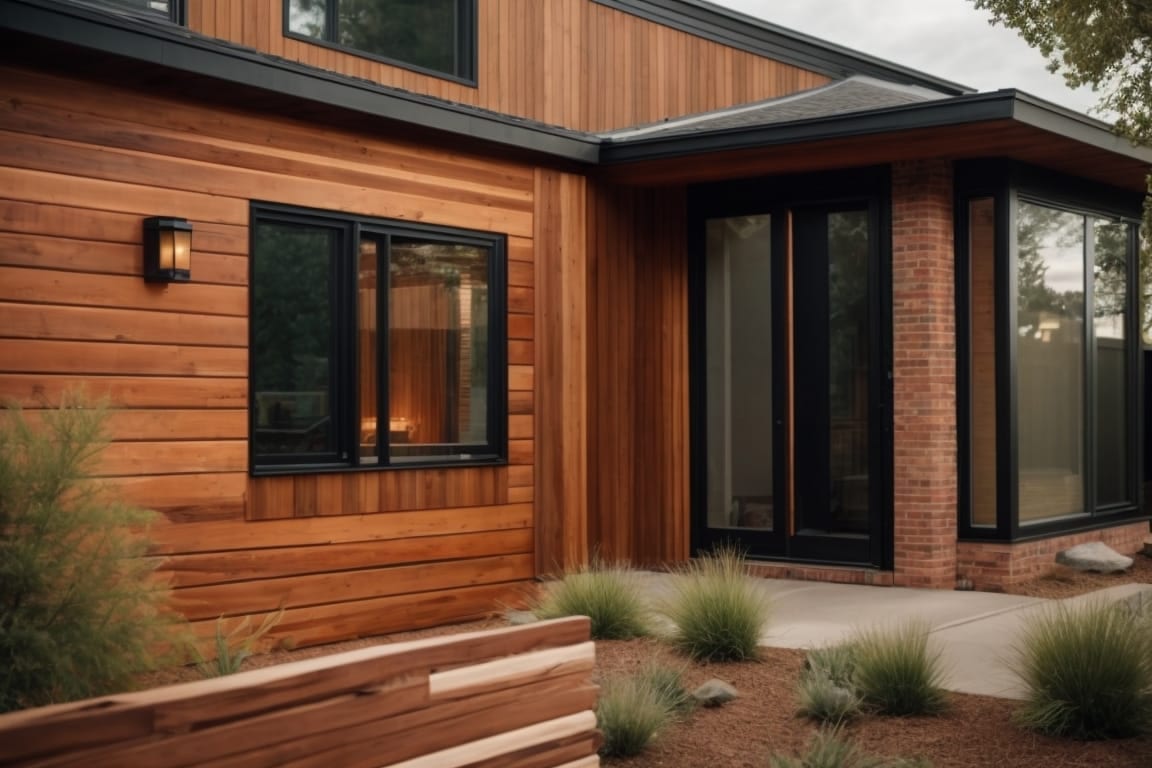
Cedar
Cedar is the original BC siding for a reason: it is beautiful, naturally rot-resistant and at home in every neighbourhood from Maple Ridge to West Vancouver. Berkana Construction installs and replaces cedar siding with the ventilation and finishing details that make it last.
What you are getting.
Nothing matches real cedar for warmth and West Coast character, and no material punishes poor installation faster in our climate. We install Western Red Cedar bevel, channel and shingle profiles over a ventilated rainscreen with stainless fasteners and proper finishing, which is what separates cedar that silvers gracefully from cedar that rots.
- Western Red Cedar, clear and knotty grades
- Bevel, channel and board-and-batten
- Cedar shingle and shake sidewall
- Rainscreen and stainless fastening
- Stain, oil or natural weathering options
- Repairs and partial replacement
Where this material shines.
West Coast Homes
Classic and contemporary cedar exteriors.
Cabins & Retreats
Natural cladding for natural settings.
Accent Walls
Cedar features paired with Hardie or panel.
Heritage Repairs
Matching older cedar profiles.
How we install it.
Grade and profile
Clear or knotty, bevel or channel, finish colour: chosen with samples against your home.
Rainscreen prep
Ventilated strapping and barrier so the wood can dry from both faces.
Install and finish
Stainless fasteners, sealed cuts and your chosen finish applied on schedule.
Services that use this material.
Siding
Complete siding services for houses, townhomes and commercial buildings: installation, repair and full replacement in every major cladding material.
Siding Installation
New siding installed on homes, additions and commercial buildings, in fiber cement, vinyl, cedar, engineered wood and modern panel systems.
Siding Repair
Cracked, loose, rotten or storm-damaged siding repaired and colour-matched, before small problems become water damage.
Siding Replacement
Full tear-off and replacement of aging or failing siding, with substrate repairs, modern weather detailing and your choice of material.
Cedar: what Lower Mainland owners should know.
Western Red Cedar Siding: The Original Coastal Cladding
Long before fibre cement or aluminum plank existed, houses on the west coast wore cedar, and plenty of the older homes we work on in Maple Ridge, Port Moody and New Westminster still do. Western Red Cedar grows here, it was milled here, and it evolved in the same rain that falls on your roof. The species carries natural extractives, the oils and tannins in the heartwood, that resist decay in a way few other softwoods can match. When people talk about a home feeling warm from the street, cedar is usually the material they are picturing.
Cedar is also the material on this site that asks the most of its owner. It weathers, it moves, it needs finishing decisions and a maintenance rhythm, and it punishes neglect more visibly than any manufactured product. This page covers grades, profiles, the installation details that make cedar last in a rainforest, finishing options, realistic upkeep, and how we approach repairs on older cedar exteriors.
Clear Versus Knotty: Understanding Cedar Grades
Cedar is sold in a range of grades, and grade drives both appearance and price more than any other decision.
Clear Grades
Clear cedar is cut free of knots, typically from older heartwood, and presents a smooth, uniform face with tight, straight grain. It takes stain evenly, machines beautifully, and delivers the refined look you see on high-end contemporary homes where cedar is used as an accent against stucco or metal. Supply of long clear lengths has tightened over the years, and pricing reflects that scarcity.
Knotty Grades
Knotty cedar carries sound, tight knots and more colour variation. It reads rustic and relaxed, suits cabins, ranchers and heritage-flavoured homes, and costs meaningfully less than clear stock. The knots themselves are not a defect when sound, though they can bleed resin through some finishes and they interrupt the grain in ways that make refinishing slightly less predictable. Neither grade is better in durability terms; the choice is aesthetic and budgetary.
Cedar Profiles We Install
The same lumber becomes very different exteriors depending on how it is milled and hung.
Bevel Siding
Bevel, or clapboard, is the traditional horizontal taper-sawn board, overlapped course over course. It is the profile on most older cedar homes in the region and remains the standard for character renovations.
Channel and Tongue-and-Groove
Channel siding interlocks with a reveal between boards and can run horizontally or vertically. Tongue-and-groove gives a tighter, flusher wall. Both suit modern designs where crisp lines matter, and vertical channel in particular has become a signature of contemporary west coast architecture.
Board and Batten
Wide vertical boards with narrow battens covering the joints deliver a farmhouse rhythm that has surged in popularity. Cedar board and batten needs careful attention to fastening so the wide boards can move seasonally without splitting.
Shingles and Shakes
Sidewall shingles, whether uniform coursing or staggered, are the definitive coastal look for gables and full walls. They shed rain beautifully because every course laps the one below, and individually replaceable units make future siding repair straightforward.
Building Cedar to Last: Rainscreen and Stainless Fasteners
Cedar's natural decay resistance is real, but it is not a licence to build carelessly. Two details separate cedar walls that last generations from those that fail early.
The first is a rainscreen. Strapping the cedar off the sheathing creates a drainage and drying cavity behind the boards, so water that gets past the cladding, and in this climate some always does, can run out and evaporate rather than sit against the back face. Back-priming or back-staining the boards before installation protects the hidden face and slows the moisture cycling that causes cupping.
The second is stainless steel fastening. Cedar's tannins react with ordinary steel and even with some galvanized coatings, producing black streaks that bleed down the face of the wall and are nearly impossible to remove. Stainless nails cost more per box and next to nothing per project, and there is no good argument for anything else on exposed cedar. Hot-dipped galvanized is the minimum we would ever consider, and only on painted work.
Finishing Choices: Stain, Oil, or Natural Silvering
New cedar forces a decision that manufactured sidings never ask: what do you want it to look like in five years?
A penetrating semi-transparent stain shows the grain while adding UV protection and water repellency. It is the middle path most owners choose, refreshed on a recurring cycle before the finish fails rather than after. Solid-colour stains behave more like paint, hide the grain, and last longer between coats, but once you go solid there is no easy road back to a natural look. Oil finishes feed the wood and deepen its colour, and they suit people who enjoy the ritual of maintenance, because they need it most often.
The third option is to do nothing and let the wood silver. Unfinished cedar weathers to a soft grey driftwood tone, and on the right architecture it is stunning. The catch is that silvering happens unevenly where walls see different sun and rain exposure, so north faces, covered porches and drip lines all age at different speeds. Some owners love that patina; others call us three years in asking to reverse it, which requires aggressive cleaning or brightening before any finish can go on. Our exterior painting crews handle staining and refinishing cycles for cedar homes across the region.
What Maintenance Really Looks Like
Expect to wash cedar annually, inspect the finish every couple of years, and recoat semi-transparent stains on a cycle measured in a few years rather than decades, with exposure doing more to set the schedule than any product claim. South and west walls weather fastest. Caulked joints and end-grain cuts want checking whenever you are up on a ladder anyway. None of this is difficult, but it is real, and a homeowner who will not keep up with it is happier with fibre cement or metal. We would rather tell you that before you buy the material than after. The encouraging flip side: cedar that receives this modest attention rewards it visibly, holding colour and shedding weather for decades, and a well-kept cedar wall in its thirtieth year can still be the handsomest exterior on the street.
When Cedar Is the Right Call
Cedar suits heritage homes where anything else looks wrong, contemporary designs that use natural texture deliberately, and owners who value a living material that ages rather than simply enduring. It is also the lightest structural load of any wood-look option and one of the few claddings a future owner can refinish into a completely different character. If your street is lined with cedar and your home's value rests partly on fitting it, replacing like with like is often the wise move. For properties where low upkeep tops the priority list, we will walk you through the full range of materials we install and show you the wood-look alternatives honestly.
Repairing and Reviving Older Cedar
A surprising amount of tired cedar does not need replacement. Individual split boards and shingles can be swapped, iron-stained faces can be brightened with oxalic-based cleaners, and a wall that looks finished can often be sanded, spot-repaired and restained for a fraction of recladding cost. The judgment call is moisture: probing suspect boards, checking behind at penetrations, and confirming the wall behind is dry. Where rot has moved into sheathing, honest advice shifts toward replacement. Berkana Construction Management does both kinds of work through our restorations service, so our assessment is not biased toward the bigger job.
Get an Honest Cedar Assessment
Whether you are specifying new cedar for a build, choosing a stain strategy, or wondering if a sixty year old cedar exterior has another decade left, Berkana Construction Management can help. We have served the Lower Mainland since 2019 and quote cedar alongside seven other siding systems so you can compare with clear eyes. Call (672) 771-6868 to arrange a site visit.
Cedar near you.
Dedicated cedar pages for the cities where we do this work most, each covering the local housing stock, climate exposure and common questions.
Common questions, cedar.
Get a free written quote.
Tell us about your building and what you have in mind. We respond within one business day to book a free site visit, then follow up with a clear, line-itemed quote.