
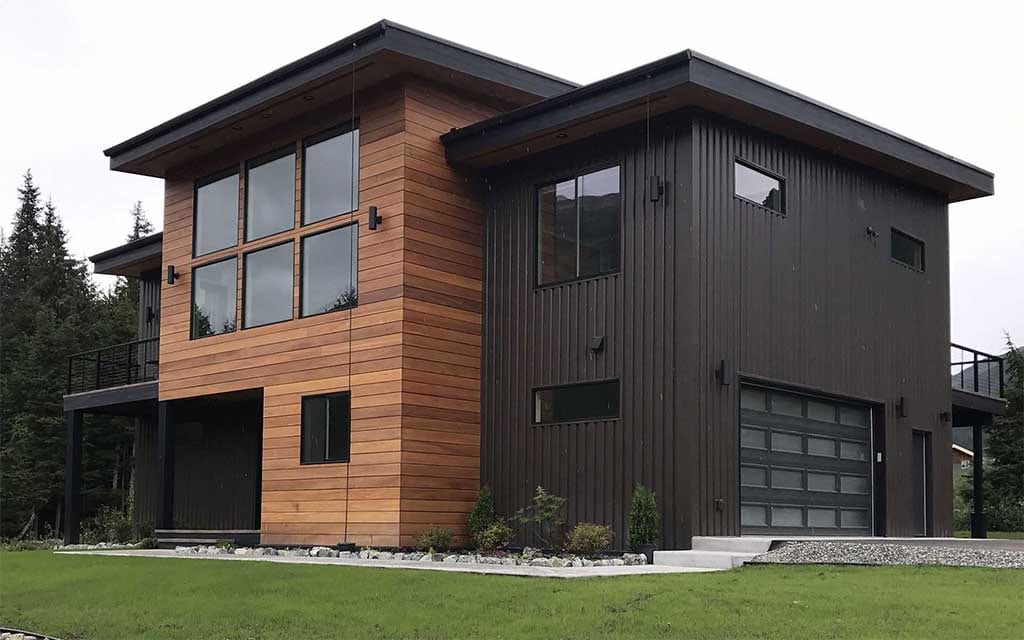
Siding Contractor in Vancouver
Vancouver's housing runs from century-old character homes in Kitsilano to laneway houses going up across the east side, and each calls for different exterior skills. Berkana Construction brings crews in from our Maple Ridge base for siding installation, replacement and repair throughout the city.
Vancouver service guides.
Dedicated pages for the work Vancouver owners ask about most, covering the local housing stock, exposure and common questions.
Siding services in Vancouver.
Services
Serving Vancouver from the Valley
Berkana Construction is based at 13490 224th St in Maple Ridge, and Vancouver sits at the far end of our service map, about forty five minutes down Highway 1. We take on city projects because the work rewards the drive: character home restorations, full recladding, laneway builds and strata repairs that need a contractor comfortable with older buildings. Since 2019 we have served homeowners, stratas, property managers, builders and commercial owners across the Lower Mainland as a licensed, insured, WorkSafeBC compliant BC contractor. Every project starts with a free written quote.
Four Kinds of Vancouver House, Four Different Problems
Vancouver forces a contractor to be versatile, because the city's housing stock does not share a common failure mode the way a single-era suburb does.
Pre-war character homes, 1910s to 1940s. Kitsilano, Dunbar-Southlands, West Point Grey, Kerrisdale, Mount Pleasant and Riley Park hold large numbers of these. Original bevel or drop siding over shiplap sheathing, no drainage gap, no modern flashing. What is remarkable is how much of the wood is still sound: old-growth material with tight grain has outlasted its own detailing. The problems are almost always at the accumulation points, watertables, window sills, corner boards and anywhere ninety years of paint layers have cracked and let water sit.
Post-war and mid-century, 1950s to 1960s. Renfrew-Collingwood, Killarney and parts of Marpole. Simpler houses, wider eaves, generally face-sealed walls. These reward selective repair more often than owners expect.
Vancouver Specials, 1965 to 1985. The most recognisable house in the city and a large share of the east side. Typically stucco on the upper storey with a different cladding below, flat-ish rooflines and long fascia runs. The classic problem is the transition between materials, where the two systems meet and water finds the joint. The second classic problem is that the original stucco was face-sealed with no way to drain.
Modern infill, laneway houses and multiplexes. Growing quickly under the city's densification rules. New construction where the assembly can be built correctly from the start, usually with mixed materials and contemporary detailing.
Character Homes and the Weight of a Century
A meaningful share of Vancouver's westside and east side stock predates the Second World War, and those buildings deserve exterior work that respects them.
When we assess a character home, the first question is not what to replace, it is what to save. Original old-growth cedar and fir siding is frequently better material than anything currently available at any price, and where the boards are sound the honest recommendation is restoration: careful paint removal where needed, selective board replacement, rebuilt watertables and sills, and corrected flashing. That costs a fraction of recladding and it keeps the house's actual fabric.
When a character home does need recladding, we document the original profiles before demolition: the reveal dimensions, corner board widths, watertable details, window and door trim. Those get reproduced in the new material, whether that is cedar or fiber cement. The house keeps its face. The wall behind it finally gets a drained and ventilated cavity, properly integrated barrier and flashing at every opening, which is what modern building science says it should have had all along.
Our cedar and wood siding in Vancouver page goes deeper on the restoration path.
The Vancouver Special Transition Detail
Enough of our east Vancouver work involves Specials that the transition deserves its own note.
The typical Special has stucco above and a different cladding below, meeting at a horizontal line partway up the wall. In original construction that joint was usually sealed rather than flashed, meaning it relied on caulk to keep water out. Caulk has a service life measured in years; the wall behind it does not get a second chance.
When we replace the lower cladding we do not simply butt the new material up to the existing stucco. We install proper transition flashing that collects water running down the stucco face and directs it out over the new cladding, so the joint drains rather than dams. Getting that detail right is the difference between a repair that solves the problem and one that relocates it.
Materials for Vancouver Projects
Fiber cement from James Hardie covers most Vancouver briefs: it takes traditional lap profiles for character streets and smooth panel formats for modern infill, and it is non-combustible, which matters on the city's tight lots where houses sit close together.
Longboard woodgrain aluminum shows up heavily in our laneway and contemporary projects, where clean lines and near-zero maintenance suit the architecture and the compact scale. We also install Western Red Cedar for owners restoring authentic wood exteriors, plus engineered wood, premium vinyl, AL13 aluminum panels, Lux steel and the EasyTrim Quick Panel system.
On pre-war homes with empty or minimal stud bays, pairing a reclad with exterior insulation transforms comfort in rooms that have leaked heat for a century, and it is only economical while the wall is already open.
Repair, Replacement and Knowing the Difference
Old buildings generate steady repair work. We rebuild rotten watertables and window sills, replace split or cupped boards, fix chronically damp north walls, and renew soffit and fascia on roof edges that have outlived several gutter systems. Full detail on our siding repair in Vancouver page.
Replacement earns its cost when the pattern shifts from isolated failures to systemic ones: repairs appearing in unrelated places, soft or bulging sections across an elevation, paint that will not hold no matter how good the prep, or a wall assembly with no drainage path that will repeat the failure regardless of how well we patch it. See siding replacement in Vancouver.
On character homes we lean harder toward repair than we would on a 1980s suburban house, because the material is often worth preserving and because the heritage value is real.
Soffit, Fascia and Attic Airflow
Roofline work is frequently more urgent than the siding below it, and Vancouver's older housing makes that especially true. Original wood soffit on pre-war houses was commonly built solid with no venting at all, and decades of repainting have closed whatever vents were cut in later. Those attics have no reliable intake air, which produces condensation, mould on the underside of the sheathing and shortened shingle life in houses that have never had an actual roof leak.
Vancouver Specials have the opposite geometry problem: long fascia runs and shallow roof pitches mean a single overflowing gutter soaks a lot of board before anyone notices. See soffit and fascia in Vancouver.
City Logistics: Access, Parking and Neighbours
Vancouver projects come with constraints that suburban work does not, and pretending otherwise is how schedules slip.
Lots are narrow and neighbours are close, sometimes a metre from where scaffolding needs to stand. Street parking is permit-controlled in much of the city, and material deliveries and waste bins need planned placement. Lane access varies enormously by block. On heritage-listed or character-retained properties there may be design review considerations before anything changes.
We plan all of it before mobilizing: staging locations, parking permits where required, debris handling, and notice to immediate neighbours. It is unglamorous work that keeps the project from becoming a problem for you or the street.
Arrange a Site Visit
If you own a character house, a Special, a new laneway build or a strata property anywhere in Vancouver, call Berkana Construction at (672) 771-6868 or email info@berkanaconstruction.com. We will book a visit, take the time your building deserves and provide a free written quote with the details spelled out.
Common questions in Vancouver.
Serving Vancouver homes and buildings.
Tell us about your Vancouver project and we will respond within one business day to book a free site visit and follow up with a clear, written quote.