
Wind Damage
After a windstorm, the damage you can see from the driveway is usually not all of it. Berkana Construction secures storm-damaged exteriors fast, inspects the full envelope and restores everything to pre-storm condition or better.
What we deliver.
Lower Mainland windstorms strip siding panels, drop soffit and peel back fascia, and every opening they leave lets the next rain in. We respond quickly to secure the building, then repair or replace the damaged sections with properly matched material.
- Fast response after storms
- Emergency tarping and securing
- Full envelope inspection
- Panel matching and reinstatement
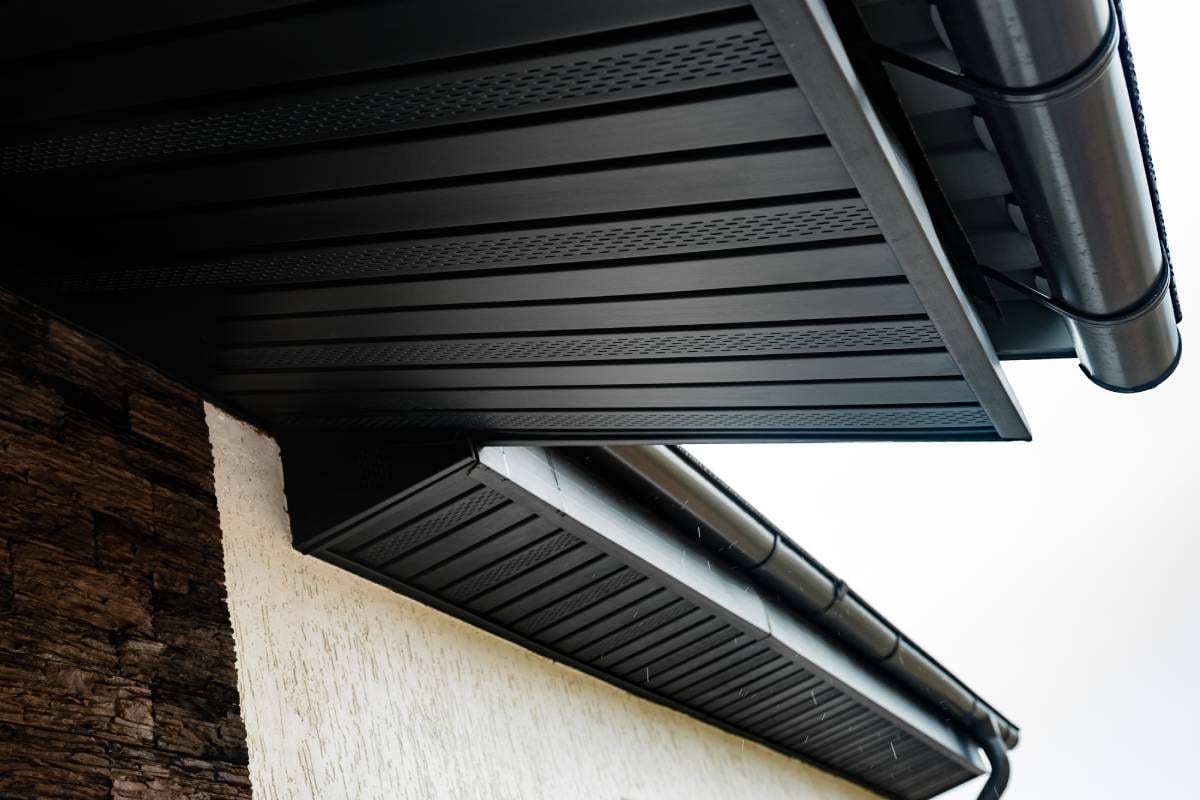
- Soffit and fascia storm repairs
- Insurance claim documentation
Projects we take on.
Blown-Off Siding
Missing and lifted panels replaced.
Roofline Damage
Soffit and fascia dropped by gusts.
Debris Impact
Branch and debris strikes repaired.
Whole-Wall Damage
Larger sections rebuilt after major storms.
From first call to final walkthrough.
Secure the building
Loose material removed or refastened and openings weather-protected.
Inspect and document
Full exterior inspection with photos, so hidden damage does not surface later.
Restore
Damaged sections repaired or replaced with matched materials and correct fastening for wind exposure.
Pick the right cladding.
James Hardie
Fiber cement siding engineered for wet climates: fire resistant, rot proof and warranted for decades, installed to Hardie spec.
Cedar
Natural Western Red Cedar bevel, channel and shingle siding, installed with the detailing that keeps wood beautiful in a wet climate.
Vinyl
The budget-friendly workhorse: modern premium vinyl installed correctly, with straight lines, proper gapping and clean trim.
AL13 Panels
Architectural aluminum panel system with clean modern lines, non-combustible and engineered for fast, precise installation.
Wind Damage: what Lower Mainland owners should know.
Every fall and winter, a handful of Pacific frontal systems line up and drive wind through the Lower Mainland hard enough to make the news. Gusts funnel down the Strait of Georgia, accelerate over open water, and slam into the Fraser Valley, and the morning after, our phone starts ringing: siding panels in the yard, trim hanging loose, a corner of the house suddenly showing bare sheathing. Windstorm damage to cladding is one of the most common exterior emergencies we deal with, and it is also one of the most misunderstood, because what you can see from the driveway is usually only part of the story. Here is how wind actually damages siding, what to do in the first hours, and how a restoration should proceed from emergency tarp to final panel.
Why Lower Mainland Windstorms Strip Siding
Wind does not simply push on a wall. As it flows around a building it separates at corners, eaves, and roof edges, creating zones of strong negative pressure, which is to say suction. Cladding at outside corners and along gable ends experiences uplift forces far higher than the wall field in the middle of an elevation. That is why storm damage so often starts at a corner: one panel unlocks or one piece of trim lifts, and once wind gets behind the cladding, it inflates the assembly like a sail. Pressure acting on the back face of a panel is far more destructive than pressure on the front, and a small initial breach cascades into a stripped wall in a single gust cycle. Add flying debris, falling branches, and the freeze-thaw brittleness of cold snaps, and you have the standard recipe for the calls we take every November through February.
Failure Mode One: Aged and Brittle Panels
Vinyl loses flexibility as it ages. Ultraviolet exposure and thermal cycling gradually embrittle the material, so a panel that would have flexed and held in year five simply snaps in year twenty five. Cold weather compounds this: the same storm that a wall shrugged off in September can shatter panels in a January cold snap. Brittle vinyl siding also cracks around its nailing hem, which weakens the very connection holding it to the wall. When we inspect an older elevation after a storm, we flex-test surrounding panels, because if the damaged area failed from brittleness, its neighbours are one storm behind it.
Failure Mode Two: Bad Fastening
A shocking amount of wind damage traces back to the day the siding went on. Nails driven too tight pin vinyl panels so they cannot move, which causes buckling and stress cracks that wind then exploits. Nails driven through the panel face instead of the slotted hem split the material. Fasteners spaced too far apart, fasteners that missed the framing or strapping behind, and staples where ring-shanked nails were specified all reduce holdout dramatically. Fibre cement planks face-nailed too close to edges, or blind-nailed with too few fasteners per stud, can rotate and pull free under suction. Good siding installation practice exists precisely because of wind: manufacturer fastening schedules are wind-load engineering, not suggestions.
Failure Mode Three: No Room to Move
Vinyl expands and contracts noticeably with temperature, several millimetres over the length of a panel between a cold night and a hot afternoon. Installers are supposed to leave expansion gaps at trim and cut panels slightly short so this movement can happen freely. When panels are cut tight and locked hard into J-channel, thermal stress pre-loads the wall. The siding oil-cans, distorts, and partially unlocks its seams, and a storm finishes the job. If your siding rattled or ticked on warm days before the storm, gapping problems were likely already present.
The First Twenty-Four Hours: Securing and Tarping
After a storm, the priority order is safety, water exclusion, documentation, and only then repair planning. Loose panels and dangling trim become projectiles in the next gust, so anything hanging gets removed or secured immediately. Exposed sheathing and torn building paper must be covered before the next rain band arrives, which in this region might be hours away. We use tarps and self-adhered membrane patches fastened so they shed water rather than collect it, lapped in the correct direction, and secured against further wind. Photograph everything before and during this emergency work: wide shots of each elevation, close-ups of every damaged area, and shots of debris where it landed. Do not throw broken panels away. They establish profile, colour, and condition for both matching and the insurance file.
One more point on emergency work: resist the urge to nail everything back up yourself in the dark. Screws driven through the face of panels to hold them overnight create permanent holes in material that might otherwise have been reinstalled, and ladders in gusty conditions injure people every storm season. Temporary securing done from the ground, or by a crew with proper fall protection, keeps a bad night from getting worse. If the breach is above the first storey, leave it tarped and wait for daylight.
Full Envelope Inspection: The Damage You Cannot See
The visible gap in the siding is the headline, but wind damage is a whole-wall event. Once a storm has pressurized the cavity behind the cladding, problems appear in places the homeowner never looks. Our post-storm inspections cover every elevation, not just the obviously damaged one, and they extend to the components around the siding: soffit panels that lifted or dropped out of their channels, fascia that pried loose when gutters caught the wind, flashings bent or unseated at windows and penetrations, and caulk joints torn by frame movement.
Hidden Damage That Surfaces Later
Wind that gets behind cladding tears building paper and housewrap, and a torn water-resistive barrier is invisible once the wall is closed. Panels can partially unlock, seat back down, and look normal from the ground while no longer being attached; the next storm removes them entirely. Hairline cracks in fibre cement and stress-whitened zones in vinyl mark future breakage. Wind-driven rain during the storm may have entered through temporary openings, wetting insulation and sheathing that will not announce itself until stains appear months later, at which point you are into water damage restoration territory as well. This is why we probe attachment panel by panel across the affected zone and check moisture readings behind any breach, rather than trusting a visual scan.
The Matching Problem: Discontinued Panels
Here is the awkward truth about storm repairs on older homes: your siding profile may no longer exist. Manufacturers retire colours and profiles constantly, and a fifteen-year-old vinyl line is very unlikely to still be in production. Even when a profile survives, your walls have faded for years in the sun and new material will read visibly different. There are several honest paths through this. Sometimes a compatible current profile is close enough in exposure and shadow line to blend acceptably. Sometimes we harvest matching panels from an inconspicuous elevation, such as behind a garage, and install the new mismatched material there instead. Sometimes the correct answer is to reside the entire affected elevation corner to corner, so any difference falls on a natural break line where the eye does not compare surfaces side by side. When damage is extensive and material is unobtainable, replacement of larger areas becomes the practical and often the insurer-recognized route. We lay out these options with straight talk about how each will look in five years, not just on completion day.
Building the Insurance File
Windstorm damage is the classic sudden and accidental peril, and most homeowner policies respond to it, but the quality of your documentation shapes how smoothly the claim proceeds. Adjusters need to reconstruct the event from evidence: date-stamped photographs, a clear description of which elevations were affected, and a written scope that itemizes damaged components. Where matching is impossible, the file needs to say so explicitly and explain why a larger repair area is required, because that reasoning is what the adjuster takes to their guidelines. Berkana Construction Management prepares insurance-ready photo documentation and written scopes as a standard part of every storm file, and we are happy to walk your adjuster through the findings on site. What we will not do is promise a specific settlement, since coverage decisions rest with your insurer and your policy wording; our job is to make sure nothing legitimate gets missed and the record is airtight.
Reinstalling for the Next Storm
A storm repair that puts the wall back exactly as it was is a scheduled appointment for the same failure. Wind-resistant reinstallation is mostly a matter of discipline in details that cost little but get skipped constantly.
Fastening and Detailing That Holds
For vinyl, that means corrosion-resistant nails with adequate head diameter, centred in the slot, driven into solid backing, snug but leaving the panel free to slide, at the spacing the manufacturer specifies for the local wind exposure, tightened up further in corner zones where suction peaks. Utility trim and undersill detail get used where panels are cut, so the raw edge is mechanically locked rather than relying on friction. Expansion gaps are cut properly at every termination. For fibre cement and engineered wood, it means the correct nail type and length, edge distances respected, and additional fasteners where exposure demands them. Starter strips get anchored properly because every course above depends on the first one. Corner posts, the launch point of most wind failures, get fastened and capped so wind cannot get purchase. Where a wall is being substantially redone, we also make sure the water-resistive barrier and flashing integration is corrected at the same time, since an open wall is cheap access that will not come again. Done this way, a targeted siding repair leaves the wall stronger than it was the day before the storm.
After the Cleanup Crews Leave
Once the restoration is complete, put your house on a simple storm routine. After any major wind event, walk all four elevations and look up: check corners, gables, soffit lines, and trim. Listen on windy days for new rattles, which are panels telling you they have unlocked. Keep trees pruned back from walls, since branch strikes cause a large share of the puncture damage we repair. If sections of your cladding are reaching brittle old age, plan proactive replacement of the exposed elevations on your schedule and budget rather than the weather's. It also pays to know your property's exposure: homes on ridgelines, at the mouth of the valley, near open farmland, or facing large water bodies see meaningfully stronger gusts than sheltered interior streets, and their exteriors should be detailed and maintained accordingly.
Storm Damage? Start With a Straight Answer
If a windstorm has opened up your exterior, get it secured and assessed before the next front rolls in. Berkana Construction Management has been repairing storm-damaged cladding across Maple Ridge and the Lower Mainland since 2019. We are licensed, insured, and WorkSafeBC compliant, quotes are free and in writing, and the documentation we hand you is built for your insurance file. Call (672) 771-6868 and tell us what the wind did.
Common questions, wind damage.
Get a free written quote.
Tell us about your building and what you have in mind. We respond within one business day to book a free site visit, then follow up with a clear, line-itemed quote.