
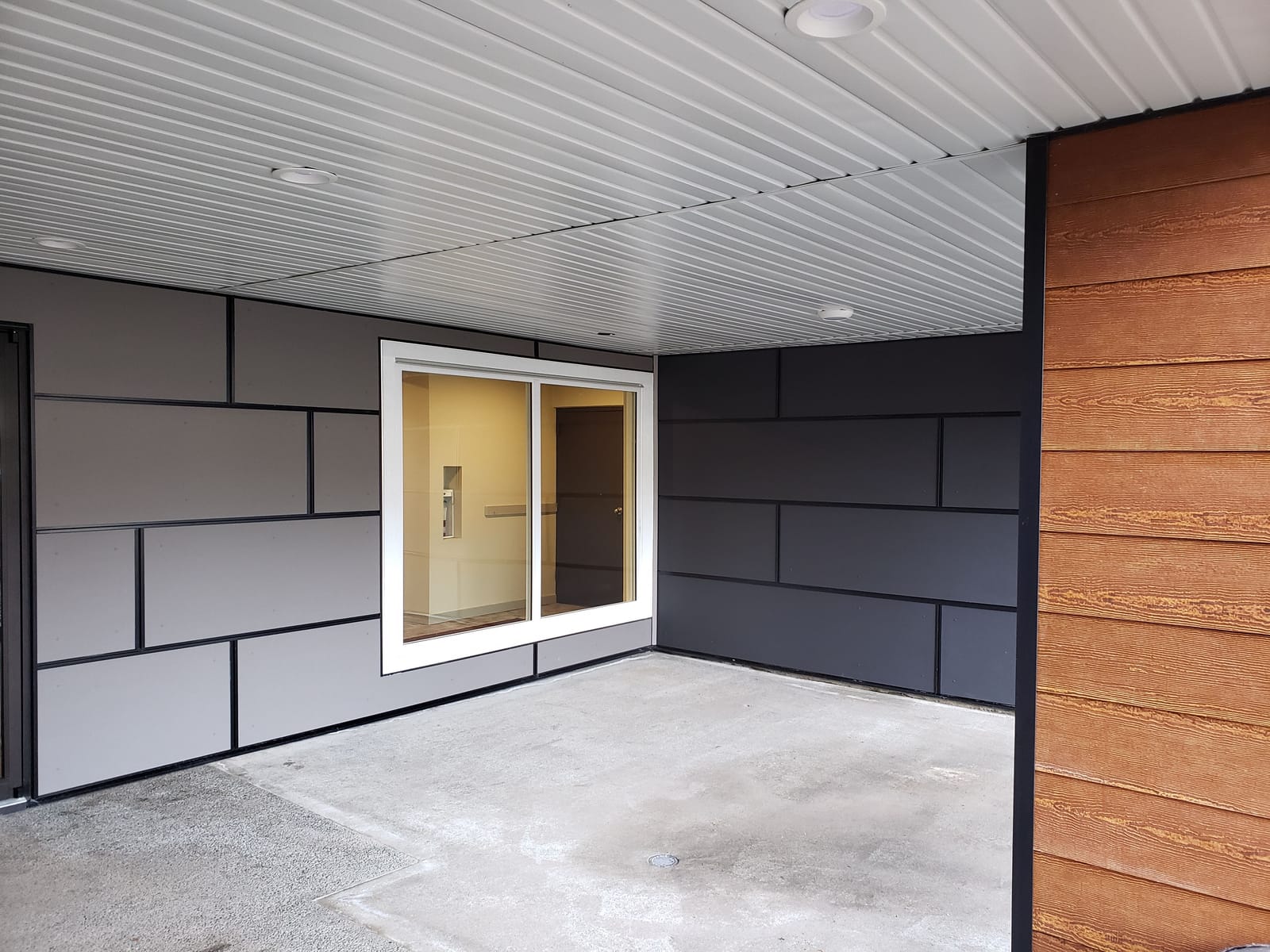
Siding
Your siding is the first line of defence between your building and one of the wettest climates in Canada. Berkana Construction installs, repairs and replaces siding across Maple Ridge, the Tri-Cities and Metro Vancouver, matching the right material and detailing to your building and budget.
What we deliver.
Siding is what Berkana Construction was built on. We install, repair and replace James Hardie fiber cement, vinyl, cedar, engineered wood and aluminum panel systems, with the flashing, rainscreen and moisture detailing that exterior walls need to survive Lower Mainland weather.
- New siding installation
- Siding repair and damage fixes
- Full siding replacement
- Fiber cement, vinyl, cedar, engineered wood
- Aluminum and composite panel systems
- Rainscreen and moisture management detailing
Projects we take on.
Single-Family Homes
Re-sides, repairs and new builds.
Townhomes & Duplexes
Multi-unit exteriors and strata work.
Commercial Buildings
Storefronts, offices and light industrial.
New Construction
Cladding packages for builders.
From first call to final walkthrough.
Free assessment
We walk the exterior with you, check the condition of the existing cladding and talk through goals and budget.
Material and quote
A written, line-itemed quote with material options, so you can compare vinyl, Hardie, cedar and panel systems on real numbers.
Installation
Removal, substrate checks, weather barrier, flashing and new cladding installed to manufacturer spec.
Walkthrough
A final walkthrough together, full site cleanup and your warranty paperwork.
Pick the right cladding.
James Hardie
Fiber cement siding engineered for wet climates: fire resistant, rot proof and warranted for decades, installed to Hardie spec.
Cedar
Natural Western Red Cedar bevel, channel and shingle siding, installed with the detailing that keeps wood beautiful in a wet climate.
Vinyl
The budget-friendly workhorse: modern premium vinyl installed correctly, with straight lines, proper gapping and clean trim.
AL13 Panels
Architectural aluminum panel system with clean modern lines, non-combustible and engineered for fast, precise installation.
Siding: what Lower Mainland owners should know.
Siding is the part of your home that takes the weather so the structure behind it does not have to. In the Lower Mainland, that is not a small job. Between October and April, the walls of a house in Maple Ridge, Coquitlam, or Surrey can see weeks of near continuous rain, much of it pushed sideways by wind coming up the Fraser Valley. A wall that sheds that water reliably will protect the framing for decades. A wall that lets even a small amount of it in will rot quietly until the damage becomes expensive to ignore.
This page covers siding as a whole: what installation, repair, and replacement each involve, how our regional climate changes the way the work should be done, and how to judge whether a contractor actually understands the wall they are about to open up.
The Three Core Siding Services
Most siding projects fall into one of three categories, and it matters which one you are actually in. Homeowners often call asking for one and end up needing another once someone experienced looks at the wall.
New Siding Installation
Installation applies to new construction, additions, and situations where a wall is being clad for the first time or after a full strip down to sheathing. The work includes the weather resistive barrier, rainscreen strapping, flashing at every window, door, and penetration, and then the cladding itself. Done properly, it is a layered system rather than a single product nailed to the wall. Our siding installation page walks through the entire sequence in detail, from sheathing inspection to final caulking.
Siding Repair
Repair addresses localized damage: a cracked fibre cement plank, cedar boards gone punky at the bottom of a wall, vinyl panels lifted by a windstorm, or soft spots around a window that was never flashed correctly. Good repair work matches materials and profiles, corrects the underlying cause, and ties new flashing into old membrane so the fix does not just move the leak sideways. The siding repair page explains how we diagnose problems and when a repair is genuinely worth doing.
Full Siding Replacement
Replacement means stripping the existing cladding entirely, inspecting and correcting what is underneath, and rebuilding the wall assembly to current standards before installing new siding. For many Lower Mainland homes built before rainscreen requirements entered the BC Building Code, replacement is the moment the wall finally gets a drainage cavity behind the cladding. Our siding replacement page covers tear off, what we commonly find under old siding, and how to plan for surprises.
Why the Wall Assembly Matters More Than the Cladding
Here is the thing most people are never told: the siding you can see is not what keeps your house dry. Every cladding material leaks a little. Wind driven rain gets behind lap joints, through butt joints, around trim. That is expected. What determines whether your house stays healthy is what happens to that water next.
A properly built wall in this climate has several layers working together. The sheathing carries the structure. The weather resistive barrier, whether building paper or a synthetic wrap, is the actual drainage plane that directs water down and out. Flashings at windows, doors, decks, and every pipe or vent penetration lap into that barrier in shingle fashion so gravity works for you rather than against you. Rainscreen strapping holds the cladding off the barrier, creating a ventilated cavity typically around 10 millimetres deep where water drains and the back of the siding can dry.
When any of those layers is missing or installed out of sequence, the cladding becomes a trap instead of a shield. Water that gets behind it has nowhere to go, sits against the sheathing, and rot begins. This is why two houses with identical siding products can age completely differently. The product was never the point. The assembly was.
British Columbia learned this lesson the hard way. The leaky condo crisis of the 1990s, concentrated in the Lower Mainland, came largely from face sealed walls with no drainage cavity built during a construction boom. The building code response made rainscreen construction mandatory in coastal BC for most wood frame buildings. Any siding contractor working here should be able to explain that history and why it changed how walls are built, because the physics have not changed since.
How the Lower Mainland Climate Shapes Siding Work
Our region is one of the harder places in Canada to keep a wall dry, and the specific challenges are worth understanding.
Volume and Direction of Rain
Annual rainfall across the Lower Mainland is heavy, and communities backing onto the mountains, including Maple Ridge and the North Shore, receive noticeably more than areas near the water. More important than volume is direction. Storms arrive with wind, so rain hits walls, not just roofs. South and southeast facing elevations take the brunt of it, and details on those walls fail first when the work was marginal.
Moss, Algae, and Shade
Tall evergreens and long grey winters mean north facing walls and shaded elevations stay damp for months. Moss and algae grow on cedar, on the north side of vinyl, and in the shadow lines of trim. Growth itself is mostly cosmetic, but it holds moisture against the surface and shortens finish life, which is one reason wall orientation should influence material choice.
Freeze Thaw Cycling
We do not get prairie winters, but we get dozens of nights each year that hover around zero. Water that has found its way into a crack, an open butt joint, or the bottom edge of a swollen wood board freezes, expands, and makes the opening larger. Small defects grow every winter, which is why prompt repair of minor damage is genuinely cheaper than deferral.
Long Wet Seasons and Scheduling
Membrane, flashing, sealant, and paint all have moisture and temperature limits. Competent crews plan Lower Mainland exterior work so that walls are never left open to weather overnight, stage tear off in sections, and keep temporary protection on hand. Siding can absolutely be installed here year round, but it takes discipline that fair weather trades do not always have.
Material Options at a Glance
Material selection deserves its own conversation, and our materials page compares options in depth, but the short version for this region looks like this.
James Hardie fibre cement planks and panels handle moisture and hold paint well, do not feed moss the way wood can, and suit the classic lap siding look most neighbourhoods expect. Western Red Cedar is the heritage choice, beautiful and locally traditional, but it demands a realistic commitment to refinishing. Premium vinyl remains the budget conscious workhorse, and modern thicker profiles resist wind and fading far better than the thin products of past decades. Engineered wood siding offers a warm wood appearance with treated strand construction that resists rot better than raw lumber. For modern architectural looks, aluminum systems such as AL13 and Longboard panels deliver crisp lines and woodgrain finishes with almost no maintenance, and they have become common on contemporary builds and commercial frontages across the region.
Each of these installs differently. Fastening schedules, clearances, joint treatment, and trim details are specific to the product, and mixing up the rules is one of the more common installation failures we correct.
How to Choose a Siding Contractor
Because the critical layers of a siding job get covered up, you are buying trust as much as product. A few practical filters help.
Ask about the layers you will never see. A contractor who talks fluently about drainage planes, lap sequence, head flashing, and rainscreen cavities is thinking about the right things. One who only talks about the cladding brand is selling you the visible ten percent of the job.
Ask what happens when they find rot. Tear offs on older homes regularly expose damaged sheathing or framing. You want to hear a clear process: document it, price the correction transparently, fix it before closing the wall. Vague answers here become disputes later.
Get a written, line itemed quote. A single lump number hides scope. When the quote separates tear off, membrane, strapping, flashing, cladding, trim, and disposal, you can compare bids honestly and see exactly what you are paying for. Berkana Construction Management provides free written quotes broken out this way for every project, because we would rather lose a job on clear numbers than win one on ambiguity.
Confirm licensing, insurance, and WorkSafeBC coverage. Exterior work involves ladders, scaffolding, and sometimes multiple storeys. If a contractor cannot show current coverage, the liability lands on you as the homeowner.
Finally, expect honest advice about scope. Not every failing wall needs full replacement, and not every problem can be patched. A contractor willing to tell you that a targeted repair will buy you five good years, or conversely that repairing a rotten assembly is throwing money away, is a contractor thinking past the invoice.
What Siding Work Involves Day to Day
Whatever the scope, expect a similar rhythm. Materials arrive and are staged, protection goes down over landscaping and decks, and work proceeds elevation by elevation. There is noise from saws and nailers during working hours, and there will be days when a wall of your house is down to membrane, which looks alarming and is completely normal. Crews should leave the site tidy each evening, with sharp offcuts and nails picked up, and openings weathertight before they go.
Repairs often finish in a day or two. A full replacement on a typical detached home usually runs one to three weeks depending on size, material, and what the tear off reveals. Related trades frequently fold into the same project, since scaffolding is already up: soffit and fascia renewal, gutter and downspout replacement, and window swaps are all cheaper to do while the wall is open than as standalone projects later.
Caring for Siding Afterwards
Maintenance in this climate is mostly about water management. Keep gutters flowing so overflow does not sheet down the cladding. Rinse north facing walls annually with a garden hose and soft brush rather than a pressure washer, which can drive water past laps. Keep plantings and soil well clear of the bottom edge of the siding. Walk the exterior each spring and look for cracked caulking, open joints, and paint failure, and deal with small issues while they are small. Wood products need refinishing on a schedule; fibre cement and metal mostly need washing and sealant checks.
Talk to a Local Siding Contractor
Berkana Construction Management has been installing, repairing, and replacing siding across the Lower Mainland since 2019, working out of Maple Ridge at 13490 224th St. We are licensed, insured, and WorkSafeBC compliant, and every project starts with a free written, line itemed quote and a straight answer on whether your wall needs repair or replacement. Call (672) 771-6868 or contact us to book a site visit.
Common questions, siding.
Get a free written quote.
Tell us about your building and what you have in mind. We respond within one business day to book a free site visit, then follow up with a clear, line-itemed quote.