
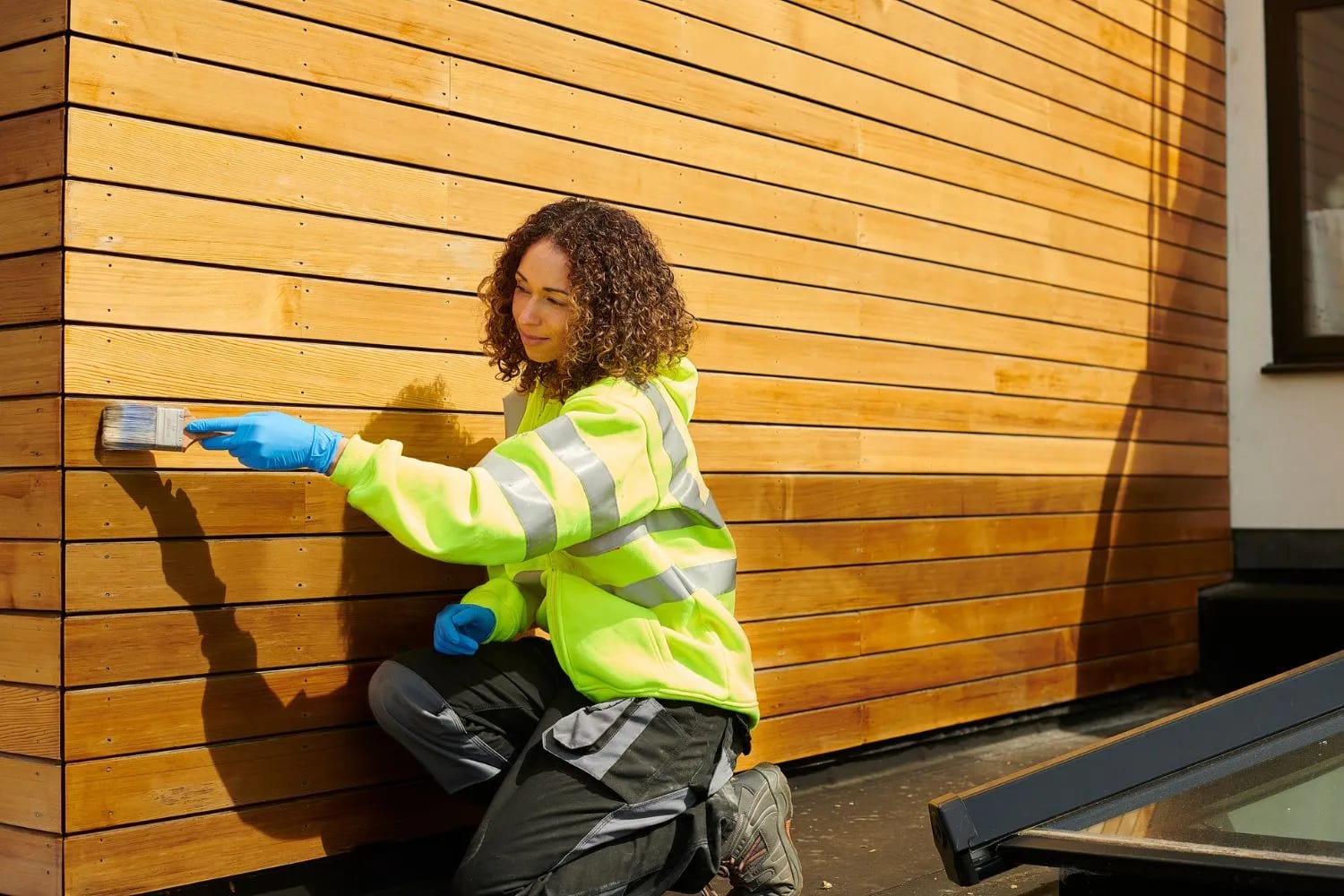
Siding Repair in Richmond
Siding repair in Richmond for weathered cedar, cracked stucco and tired vinyl on the city's 1980s and 1990s homes, with moisture checks built into every assessment.
Built for how Richmond weathers.
Richmond repairs are usually moisture stories. Cedar that was nailed tight to the wall in 1988 has spent decades in fog and humidity with no way to dry, so what looks like one bad board is often a section that needs selective replacement and a proper drainage detail behind it. We probe, document and repair what actually needs repairing. Owners searching for cedar siding repair in Richmond are typically at exactly this decision point, and we give them a straight answer with photos rather than an automatic recladding pitch.
Richmond's big 1980s and 1990s homes were commonly clad in cedar or stucco that is now three to four decades old, on flat delta lots with little natural runoff.
Damaged siding lets water into the wall, and in this climate that gets expensive fast. We repair impact damage, wind-lifted panels, rot, failed caulking and worn sections, matching the existing material and colour as closely as the product allows.
- Storm and wind damage repair
- Impact damage and cracked panels
- Rot and moisture damage fixes
- Colour and profile matching
- Caulking and flashing repair
- Honest repair-or-replace advice
How we run siding repair in Richmond.
Inspection
We find the damage you can see and check for the moisture problems you cannot.
Repair scope
A clear written scope and price. If a repair will not solve the problem, we say so.
Repair work
Damaged sections removed, substrate dried or rebuilt, new material installed and matched.
Siding Repair in Richmond: what owners should know.
Richmond Repairs Are Moisture Stories
Almost every siding repair we do in Richmond traces back to the same underlying condition: a wall that got wet and could not dry.
The city sits at sea level on the delta, humidity stays high, fog rolls off the river through the cooler months, and the flat lots offer no slope to move water away. A Richmond wall holds moisture longer than the same wall would anywhere inland, so damage that would stay cosmetic in a drier city progresses to rot here. That shapes how we diagnose, and it shapes what a repair has to include to actually last.
The common calls cluster into a handful of patterns.
Cedar gone soft at butts and openings. The dominant Richmond repair, on the 1980s and 1990s cedar that clads so much of Broadmoor, Garden City, Seafair and Thompson. Boards nailed tight to sheathing with no drainage gap and unsealed cut ends have spent decades wicking water at every joint. Our cedar siding in Richmond page covers the repair-versus-replace decision in depth.
Stucco cracks that wick. Face-sealed stucco from the same era develops hairline cracks that feed water into a wall with no way to drain it. The visible crack is small; what is behind it after ten wet winters is the actual problem.
Storm damage on the west exposures. Nothing slows the wind between the Strait and a Terra Nova or Seafair west wall. Lifted laps, cracked panels and debris strikes follow every serious blow.
Tired vinyl in Hamilton and East Cambie. Brittle, faded and increasingly unmatchable, the standard end-of-life pattern.
Fascia and soffit rot behind gutters. Long gutter runs on the flat 1980s roofscapes overflow quietly for years before anything sags. See soffit and fascia in Richmond.
Diagnosis Before Patching
The board you can see is where the water stopped, not where it entered, and in Richmond the gap between those two points is often years wide.
A repair visit starts above the damage. We check flashing at every opening and intersection over the failed area, look for kick-out flashings where rooflines meet walls, inspect deck ledgers, watch how gutters and downspouts behave, and check clearances at grade, where Richmond's flat lots and raised garden beds frequently hold cladding in permanent splash contact. We probe to find the real extent of soft material rather than assuming the visible edge is the boundary, and we take moisture readings where the picture is ambiguous.
Then we tell you what caused it. A repair over an unsolved leak is just a slower leak, and in a climate where walls cannot dry, the second failure comes faster than the first.
Matching on Richmond Walls
Matching is most of the craft, and Richmond's mix makes it interesting.
On cedar, matching profile and grade is usually achievable, and the harder question is finish: new boards against thirty-year-old silvered cedar will read as a patch unless the refinishing plan treats the whole elevation. We are upfront about that trade-off before we start.
On vinyl, much of the original product is discontinued and decades of UV have shifted the wall's colour, so a technically correct panel arrives visibly brighter. We keep sources for legacy profiles, and when a true match no longer exists we lay out the honest options: pull sound panels from a hidden elevation, blend to the nearest profile, or treat a full elevation as a deliberate change.
On stucco, patching is straightforward; making a patch invisible is not, and we say which result a given budget buys.
The Face-Sealed Question Behind Every Repair
Many Richmond repairs sit on top of a bigger fact: the wall was built face-sealed, with no drainage cavity, because that was standard practice when so much of this city went up.
A good repair on that wall fixes the entry point we found. It cannot give the wall a way to dry, and in Richmond's humidity that limitation matters more than anywhere else we work. When we find a second or third unrelated failure on the same face-sealed house, that is the assembly talking, and we will say so plainly rather than quietly booking the next patch.
That conversation comes with evidence: photographs of what we opened, moisture readings, and a written quote for both the repair and the recladding path so you can weigh them on real numbers. Our siding replacement in Richmond page explains what the rebuild involves.
Storm Response and Insurance
After a windstorm off the Strait, the priority is stopping water. We secure lifted and missing sections on the west exposures quickly, then return for the permanent repair once the wall is protected.
Where insurance is involved, we document before we rebuild: photographs of the loss, moisture readings where water entered, and a written scope in a format adjusters can process. Wind, water and fire losses all run through our restoration service with that same paperwork support, and we rebuild to current standards rather than back to the assembly that failed.
Salt Air Repairs Near Steveston
Close to Garry Point and the south dyke, marine air adds a corrosion dimension the rest of the city does not have. Repairs there get stainless fasteners as a matter of course, corrosion-resistant flashings, and finish systems chosen for salt exposure. A repair detailed for inland Richmond shows itself within a few years on the waterfront, so we do not detail them the same way.
Booking a Richmond Repair
Call (672) 771-6868. Richmond is a straightforward run from our Maple Ridge base, and we can usually attend within days.
We inspect every elevation rather than only the one you called about, because on Richmond's slow-drying walls the elevations you are not worried about often tell us more about the house's condition than the one you are. You get photographs of what we find, a plain-language explanation of the cause, and a written line-itemed quote at no charge. If the answer is one small repair, that is what the quote says.
Siding Repair questions in Richmond.
Siding Repair quotes in Richmond.
Tell us about your Richmond project and we will respond within one business day to book a free site visit, then follow up with a clear, line-itemed quote.