
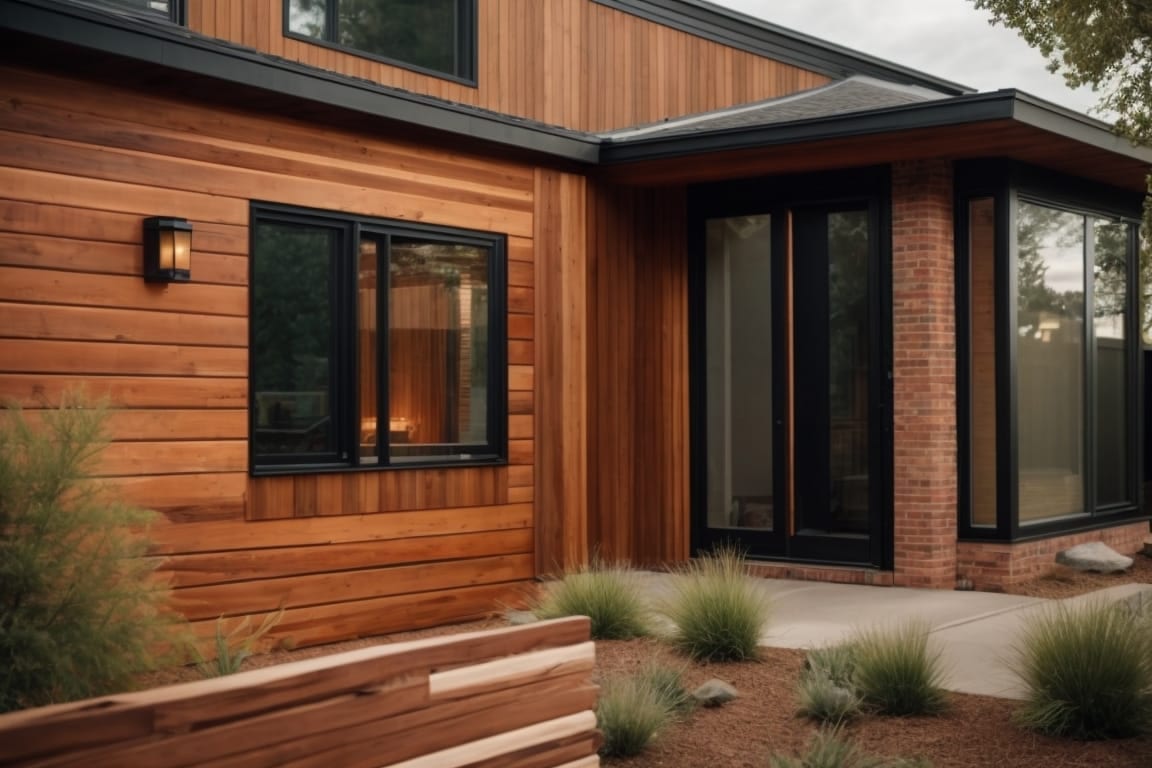
Cedar Siding in Richmond
Cedar siding repair, restoration and installation in Richmond, where thousands of 1980s cedar walls are deciding between one more restoration and a proper rebuild.
Built for how Richmond weathers.
Richmond's original cedar has lived a hard life: decades of fog and humidity, usually with no rainscreen behind it. Some of it is genuinely done, but plenty can be saved with selective board replacement, cleaning and a finish system matched to the exposure, and that is always the first option we price. When cedar is worth keeping, we rebuild the details that failed it: back-priming, stainless fasteners, ventilation. When it is not, we show you the evidence and quote cedar and fiber cement replacements side by side.
Richmond's big 1980s and 1990s homes were commonly clad in cedar or stucco that is now three to four decades old, on flat delta lots with little natural runoff.
Nothing matches real cedar for warmth and West Coast character, and no material punishes poor installation faster in our climate. We install Western Red Cedar bevel, channel and shingle profiles over a ventilated rainscreen with stainless fasteners and proper finishing, which is what separates cedar that silvers gracefully from cedar that rots.
- Western Red Cedar, clear and knotty grades
- Bevel, channel and board-and-batten
- Cedar shingle and shake sidewall
- Rainscreen and stainless fastening
- Stain, oil or natural weathering options
- Repairs and partial replacement
How we run cedar siding in Richmond.
Grade and profile
Clear or knotty, bevel or channel, finish colour: chosen with samples against your home.
Rainscreen prep
Ventilated strapping and barrier so the wood can dry from both faces.
Install and finish
Stainless fasteners, sealed cuts and your chosen finish applied on schedule.
Cedar Siding in Richmond: what owners should know.
Richmond Cedar Is Reaching Its Decision Point
Richmond's great cedar wave went up in the 1980s and 1990s, when large family homes across Broadmoor, Garden City, Seafair, Thompson and East Cambie were clad in cedar as a matter of course. Those walls are now thirty to forty years old, and across the city they are arriving at the same fork at the same time: restore, or reclad.
We spend a lot of time in front of these walls, and the most useful thing we can tell you is that the answer is genuinely house by house. Some 1985 cedar in Richmond is finished. A surprising amount is worth saving. The difference is rarely visible from the driveway, which is why the assessment matters more than the assumption.
Why Delta Air Is Hard on Cedar
Richmond does not get the North Shore's rainfall, but it punishes cedar in its own way: the city almost never lets a wall dry.
Sea-level humidity, fog off the Fraser through the cooler months, a high water table under every flat lot and little wind-sheltering slope anywhere. A cedar board that gets wet in Richmond stays wet longer than the same board would anywhere inland. Cedar handles wetting well and constant dampness poorly, so the delta turns a durable material into a vulnerable one wherever the detailing does not let it dry.
And the detailing usually does not. The 1980s standard was to nail cedar tight to the sheathing over building paper: no ventilation gap, no drainage path. The back face of every board has spent decades against damp paper with no way to dry. Cut ends were rarely sealed, so water wicked into the end grain at every butt joint. Fasteners were rarely stainless, which is where the black streaking below nail heads comes from. Near Steveston and the south dyke, salt air accelerates the fastener corrosion further.
None of that is the wood's fault. It is the assembly's, and that distinction drives the repair decision.
Grey Is Not the Same as Gone
The most common misjudgment Richmond owners make is reading weathered grey cedar as failed cedar.
Silvering is a surface effect, the wood's natural response to UV, and it says almost nothing about the board underneath. We routinely probe walls that look finished from the street and find sound, tight wood a millimetre below the grey. The opposite happens too: walls that look acceptable carrying widespread soft rot at the butts and around the windows where the water has been wicking for decades.
So we probe rather than eyeball. Board butts, the bottom two or three courses, around every window and door, at deck ledgers, and anywhere staining suggests water has been tracking. Moisture readings on the elevations that stay dampest, which in Richmond is usually north faces and anything shaded by the house next door. Then we tell you which wall you actually have.
Repair and Restoration: The First Quote We Price
When the boards are sound, restoration brings a Richmond cedar wall back for a fraction of recladding cost, and it is the honest recommendation.
That work involves cleaning off moss, algae and degraded finish with low pressure and the right treatment rather than a pressure washer that drives water into every lap. Replacing the individual boards that have genuinely failed, back-primed, end-sealed and fastened with stainless. Correcting the specific details that let water in: a missing kick-out flashing, a grade clearance problem, a gutter that has been overflowing behind the fascia. Then refinishing with a system matched to the exposure, and a realistic schedule for the next round.
On finish schedules we are direct: Richmond's humidity sits cedar finishes at the shorter end of their service life, and unshaded south and west elevations in the flat subdivisions add hard UV on top. Plan on the maintenance cycle being real, and budget for it, because stretched finishes are how sound cedar becomes rotten cedar.
When Recladding Is the Right Answer
Replacement earns its cost when soft wood is widespread rather than clustered, when several elevations are failing at once, when sheathing shows moisture damage, or when the wall's real problem is the face-sealed assembly itself, because a wall with no drainage path in Richmond's humidity will repeat the failure regardless of how well we patch it.
When we reach that conclusion, we show you photographs of exactly what we found and quote both paths anyway, so the decision is made on evidence rather than on a contractor's preference.
Recladding is also the moment to fix the assembly for good: new weather-resistive barrier, flashing at every opening, a strapped and ventilated rainscreen cavity, and generous clearances at grade and roofs. That cavity is the wall's only reliable way to dry on the delta, and it is what lets the next cladding, cedar or otherwise, reach its full service life. Our siding replacement in Richmond page covers the process.
New Cedar, Done for the Delta
Owners who love cedar and want it again get it installed the way Richmond requires: over a ventilated rainscreen, back-primed and end-sealed on all six sides, stainless fasteners throughout, and corrosion-upgraded hardware near the water in Steveston and Seafair. Bevel, channel and board-and-batten profiles, with trim proportions matched on Steveston's older streets where character matters.
Detailed that way, cedar performs here. Detailed the 1985 way, it repeats 1985.
If You Want the Look Without the Cycle
A large share of Richmond cedar owners choose not to sign up for another finish schedule, and the usual landing spot is James Hardie fiber cement in cedarmill texture: the grain and shadow line without the rot risk, dimensionally stable in constant humidity, with ColorPlus factory finishes that hold up under the delta's unshaded sun. Engineered wood sits between the two. Longboard woodgrain aluminum removes maintenance from the conversation entirely and is indifferent to salt air.
We bring samples to the site visit and quote your two or three finalists side by side on your actual measured wall area.
Call (672) 771-6868. We probe honestly, photograph what we find, and put both paths in writing at no charge.
Cedar Siding questions in Richmond.
Cedar Siding quotes in Richmond.
Tell us about your Richmond project and we will respond within one business day to book a free site visit, then follow up with a clear, line-itemed quote.