
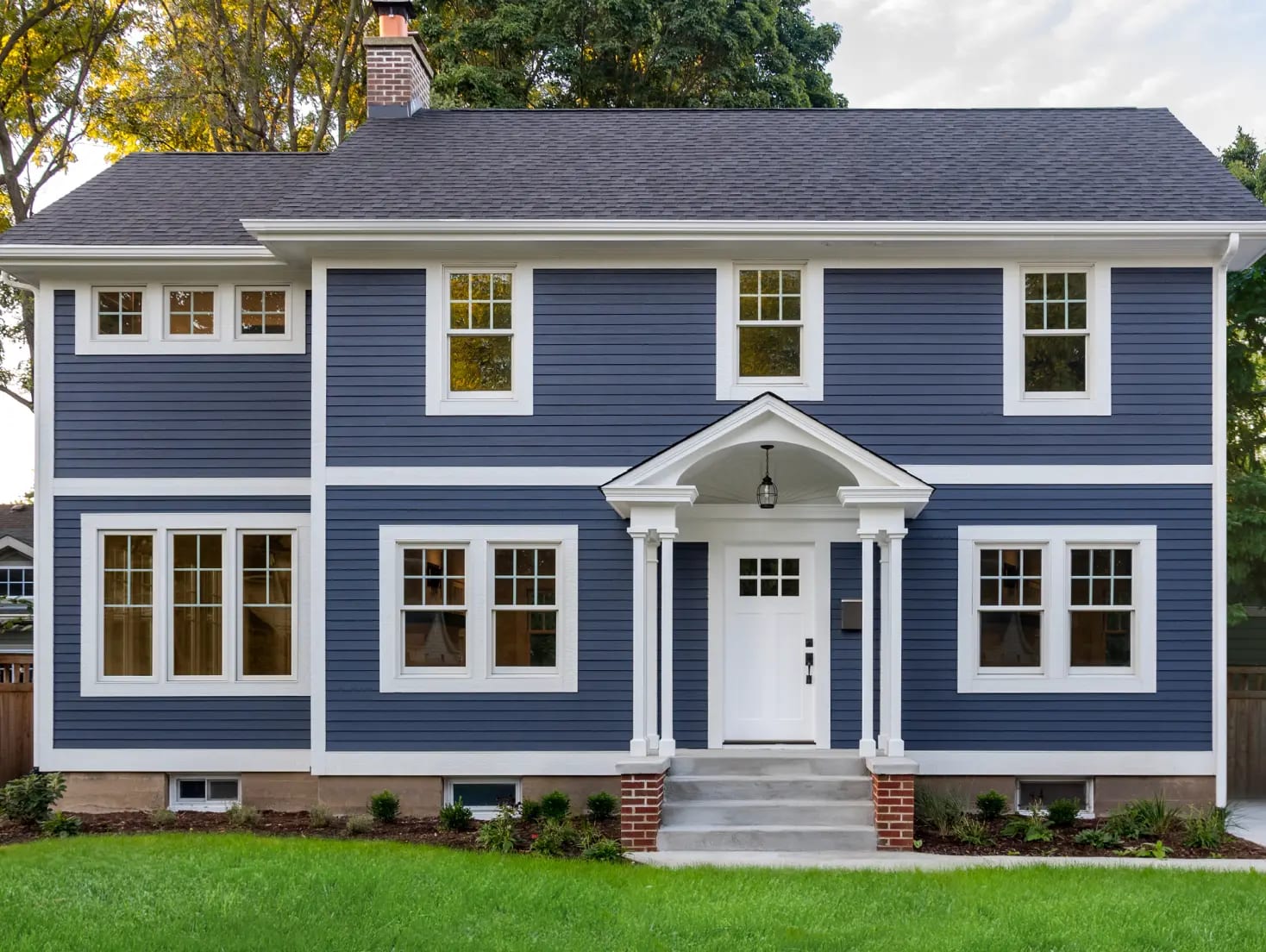
James Hardie in Coquitlam
James Hardie installed across Coquitlam, from Westwood Plateau recladding projects to Burke Mountain upgrades, detailed for slope-level rain and wind.
Built for how Coquitlam weathers.
On Coquitlam's slopes, Hardie's weight and rigidity are assets: the material stays put in wind that lifts lighter cladding, and it holds finish through the freeze-thaw swings the hillsides see more of than the valley. Plateau recladding projects typically pair HardiePlank fields with Panel or stone accents to keep the executive character while retiring the maintenance burden of 1990s cedar and stucco. We install with Hardie's spec clearances and metal flashings at the complex roof-wall interfaces these homes are full of.
Coquitlam ranges from 1990s executive homes on Westwood Plateau, many with aging cedar and stucco combinations, to new Burke Mountain builds and older homes in Maillardville.
James Hardie fiber cement is the benchmark siding for coastal BC. It does not rot, burn or feed insects, holds paint far longer than wood and carries one of the strongest warranties in the industry. The catch is that it must be installed exactly to spec, with correct clearances, flashing and fastening, which is where an experienced installer earns their keep.
- Fiber cement: will not rot, warp or burn
- ColorPlus factory finishes or site paint
- Plank, panel and shingle profiles
- Engineered for wet coastal climates
- Strong manufacturer warranty coverage
- Installed to Hardie best practices
How we run james hardie in Coquitlam.
Profile and colour
Plank, panel or shingle, ColorPlus or primed, chosen with samples in hand.
Assembly prep
Weather barrier, rainscreen and flashing detailed to Hardie's published requirements.
Spec installation
Correct gapping, clearances, fastening and touch-up, documented as we go.
James Hardie in Coquitlam: what owners should know.
Why Hardie Suits Coquitlam's Upper Slopes
Coquitlam's elevation range makes material selection more consequential here than in a flat municipality, and fiber cement answers the specific stresses of the upper neighbourhoods well.
Rainfall. Westwood Plateau and Burke Mountain receive noticeably more rain than the valley floor. Fiber cement does not rot, does not absorb and release moisture through swelling cycles, and gives moss nothing to feed on where tree cover keeps walls shaded and damp.
Freeze-thaw. The upper slopes see more freezing cycles than the flats. Materials that absorb water and then freeze suffer for it. Fiber cement stays dimensionally stable through that cycling.
Wind. The exposed plateaus take real wind loading. Fiber cement's weight and rigidity keep it in place where lighter cladding lifts, and its impact resistance handles debris.
Sun on the south slopes. Coquitlam's south-facing hillsides get significant UV in summer. ColorPlus factory finishes hold their colour where field-applied paint chalks and fades.
Fire. Non-combustible cladding is a genuine consideration on wooded slopes.
The 1990s Recladding Wave
Westwood Plateau is in its recladding years, and Hardie is where most of those projects land.
Executive homes built through the 1990s typically wore cedar and stucco combinations, and thirty-plus years into slope-level rain exposure the maintenance burden has become the deciding factor. Cedar on a shaded Plateau elevation needs refinishing on a cycle owners grow tired of. Stucco on a face-sealed wall has usually been patched more than once.
Recladding in fiber cement retires that cycle. But the more important part of these projects is not the material, it is the assembly correction underneath, because a great deal of 1990s Coquitlam construction was built face-sealed with no drainage cavity. Our siding replacement in Coquitlam page covers what we typically find and how we correct it.
Profiles for Plateau Architecture
Plateau and Burke Mountain houses are architecturally busy: complex rooflines, multiple gables and dormers, stone accents and large window walls. That rewards combining profiles rather than cladding everything in one thing.
HardiePlank lap siding for the main field, in reveals that suit the scale of these houses. Smooth or cedarmill texture.
HardiePanel in large-format sheets with battens or reveal trim, used as accent masses on gables, entries and feature elevations to break up large planes and give a contemporary edge.
HardieShingle for gable and dormer detailing, which suits the executive-home vocabulary these neighbourhoods were built in.
HardieTrim at corners, openings and the many transitions these houses have. On a facade with this much detail, trim quality is most of the visual result, and substituting wood trim reintroduces the maintenance point you were eliminating.
A typical Plateau reclad we quote keeps stone accents in place, runs Hardie lap as the field, and uses panel or shingle on gables, preserving the character of the street while ending the refinishing cycle.
ColorPlus and the Coquitlam Weather Window
ColorPlus is Hardie's factory-applied baked-on finish, cured under controlled conditions. It resists fading better than field paint, carries a separate finish warranty, and removes painting from the project entirely.
That last point carries real weight on the upper slopes, where reliable dry windows for exterior painting are shorter than in the valley and where shaded elevations punish field-applied coatings. On south-facing Coquitlam hillsides the UV resistance matters for the opposite reason.
Primed and painted on site gives unlimited colour choice and easier future changes, at the cost of a painting stage and a repaint cycle. On a Plateau house with a specific palette in mind it can be the right call, and we quote both.
Installation Is What the Warranty Rests On
James Hardie backs its siding with a long-term limited product warranty, and ColorPlus finishes carry a separate finish warranty. Both depend on installation meeting the manufacturer's published requirements, so a poor install does not just perform worse, it can void coverage you paid for.
The requirements skipped most often matter most on these houses. Minimum clearances between siding and grade, roof surfaces and decks, which on a multi-level Plateau home with several roof intersections means many places to get it right. Correct fastener type, spacing and placement, landing in framing rather than sheathing alone, which matters more on wind-exposed elevations. Flashing behind butt joints rather than sealant doing structural work. Specified gaps left at trim and openings.
We install to spec and over a rainscreen, sized generously on the upper slopes. Fiber cement can be direct-applied in drier climates. Here the drainage and ventilation cavity is what protects the sheathing and framing behind it, which are still organic materials regardless of what is on the outside.
Complex Rooflines Mean More Flashing
Plateau and Burke Mountain houses have more roof-to-wall intersections, dormers, chimney chases and deck junctions per house than simpler forms. Each one needs a kick-out flashing or an equivalent detail, and each one is a place where the original 1990s construction may have gotten it wrong.
We treat those intersections as the core of the job rather than trim work at the end, because that is where the water actually enters on houses of this shape.
Exterior Insulation While the Wall Is Open
Exterior insulation does two things on a cold Coquitlam slope: it addresses the whole wall including framing, and it raises sheathing temperature, reducing condensation risk inside the assembly during cold snaps. The labour is largely committed while the wall is open, so we price it as a separated option.
Get a Written Quote
We measure every elevation, assess access, roofline complexity and staging, and give you a written line-itemed quote at no charge, with Hardie priced against one or two alternatives on your actual wall area.
Call (672) 771-6868. Coquitlam is about twenty minutes from our Maple Ridge shop down the Lougheed corridor, so site visits and supplier runs are simple.
James Hardie questions in Coquitlam.
James Hardie quotes in Coquitlam.
Tell us about your Coquitlam project and we will respond within one business day to book a free site visit, then follow up with a clear, line-itemed quote.