
Siding Colour Trends Lower Mainland Homeowners Are Choosing in 2026
The siding colours Lower Mainland homeowners are choosing in 2026, from deep greens and warm neutrals to black accents, with tips for our grey climate.
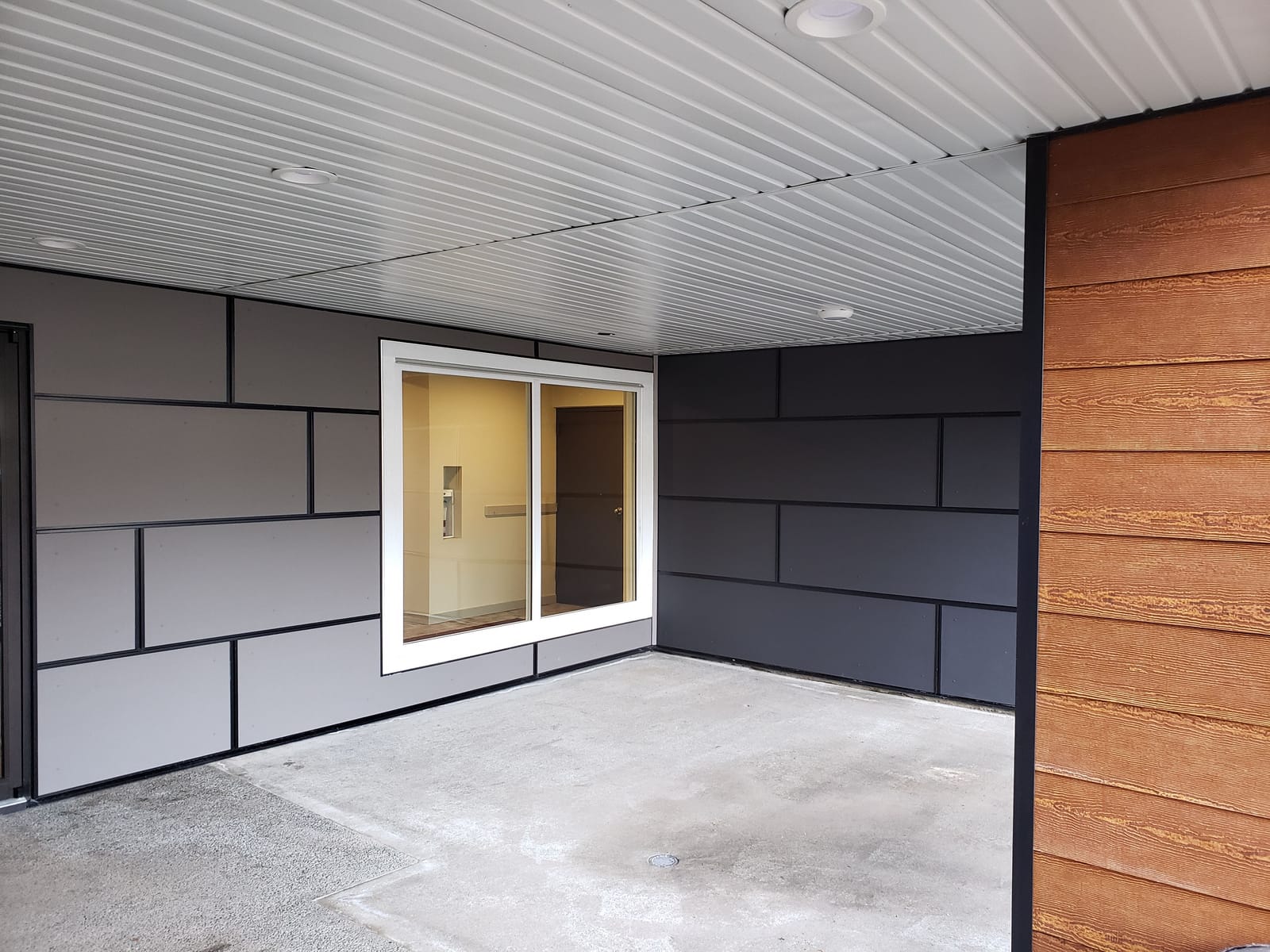
Lower Mainland exteriors in 2026 are moving toward deep greens, warm off whites, earthy clay and taupe tones, and confident black or near black statements, often paired with natural wood accents. Cool grey, the default of the last decade, is giving way to warmer and more saturated choices that hold up under our overcast skies. The strongest schemes are simple: one field colour, restrained trim and a single accent.
Why Colour Choices Are Shifting
Two forces are steering the change. First, homeowners spent years surrounded by cool grey and white minimalism, and the pendulum is swinging toward warmth and personality. Second, the region's light rewards it. For much of the year our skies act like a giant softbox, flattening contrast and muting cool colours. Palettes with warm undertones and real saturation read richer through the long overcast season, which is why the trends below have taken hold here faster than in sunnier markets.
The Palettes Defining 2026
Deep greens and forest tones
Nothing suits this landscape more naturally. Deep spruce, moss and olive greens tie a home to the cedars and hemlocks around it, pair beautifully with black window frames, and hide algae film between wash downs better than pale walls. On board and batten or lap profiles alike, green has become the signature move of new builds from Maple Ridge to Squamish.
Warm whites and creams
White is not leaving, but it is warming up. The bright, blue leaning whites of past years are being traded for cream, ivory and soft plaster tones that feel inviting rather than clinical under cloud cover. Warm white walls with matching trim create the clean monochrome farmhouse look that continues to dominate renovation boards.
Greige, clay and mushroom neutrals
The grey era is resolving into greige: neutrals with enough beige, clay or mushroom in them to feel organic. These are the safest choices on the list, flattering nearly every roof colour and holding resale appeal, while still looking current instead of builder basic.
Black and near black statements
Charcoal, iron and true black exteriors keep gaining ground, especially on modern forms and accent volumes. Matte dark finishes make landscaping pop and give simple architecture instant presence. The practical notes: dark walls show pollen and water spotting sooner, and material selection matters for heat and fade, which is where factory finished fibre cement and coated aluminum panels earn their keep.
Wood as a colour
The accent of the moment is not a paint chip at all. Warm wood tone, whether real cedar soffits or woodgrain Longboard aluminum siding that delivers the look without the refinishing cycle, is being used at entries, gables and ceiling returns to soften dark and neutral palettes. A charcoal home with a cedar toned entry surround is close to a regional uniform at this point, and for good reason: it works.
Matching Colour to Material
Colour and material decide together how a wall ages.
- Fibre cement: Factory finishes such as ColorPlus on James Hardie siding carry deep and mid tone colours with strong fade resistance, and site painting opens up any colour a paint deck offers.
- Vinyl: Colour is baked through the material, so choose from the manufacturer's range, including their heat rated dark lines. Repainting vinyl outside its specifications risks distortion.
- Aluminum panels: Powder coated and woodgrain finishes on AL13 and similar systems hold colour with minimal change for decades, which suits the dark and wood tone trends perfectly.
- Cedar and engineered wood: Stains bring the warm natural category to life; solid paints on engineered wood cover the full trend palette. Repaint and restain cycles are part of the plan, and our exterior painting team handles both.
Browse the full range on our materials page to see which products carry which palettes.
Testing Colour in Lower Mainland Light
A colour that looked right on a screen or in a showroom can behave differently on a wall in Pitt Meadows in February. Before committing:
- Get large samples or sample boards, the bigger the better.
- View them on the actual house, on both the sunny and shaded elevations.
- Check them on an overcast day, in evening light and against your roof.
- Look at the fixed elements you are not changing: roofing, stonework, driveway, window frames.
- Live with the finalists for a week before deciding.
Colours read one to two shades lighter and cooler outdoors than indoors, so many homeowners land one step darker and warmer than their initial instinct.
Trend Versus Longevity
Siding colour is a fifteen to twenty five year decision on factory finished products, so the goal is a palette you will still like when the trend cycle turns. The safe structure: put the trend energy into accents, doors and lighting, which are easy to change, and keep the field colour in the enduring families, warm neutrals, deep greens, soft whites and charcoals, that have remained likeable across decades of cycles.
If new colour is arriving via a full reclad, the planning conversation covers profile and texture too, since exposure width, batten spacing and panel joints all change how a colour reads from the street. A deep green on narrow lap looks busier than the same green on wide panel, so lock the profile before you lock the paint chip.
Berkana Construction Management helps homeowners across Maple Ridge and the Lower Mainland choose and install exteriors they will love for decades. Call (672) 771-6868 or contact us to review samples in your own light, on your own walls.