
Moss and Algae on Siding: Safe Cleaning for Coastal BC Homes
Why moss and algae grow on siding in coastal BC, how to clean vinyl, cedar and fibre cement safely, and when green growth signals a bigger problem.
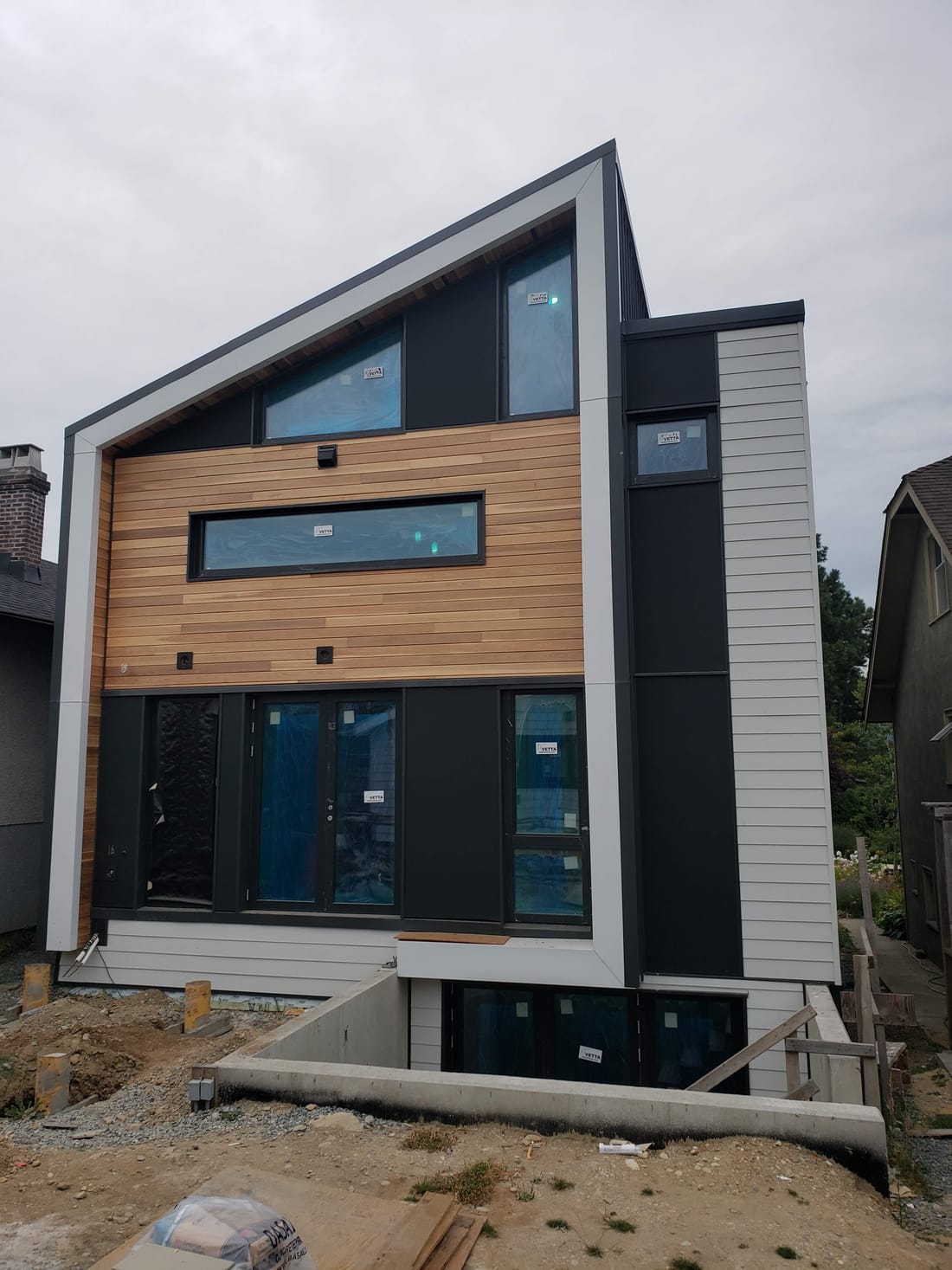
Yes, you can clean moss and algae off siding safely, and on the wet side of the Coast Mountains you will probably need to. The method that works without wrecking your cladding is a soft wash: gentle water flow, a suitable cleaning solution, a soft brush for stubborn patches, and patience. The method that causes damage is the one many homeowners reach for first, which is a pressure washer on full blast.
Why Coastal BC Walls Turn Green
The Lower Mainland gives algae and moss everything they want: long stretches of mild, damp weather, months of low sun, and abundant spores drifting off surrounding forest. North-facing walls get the worst of it because they receive little direct sunlight and dry slowest after rain. Homes near greenbelt, creeks, or stands of conifers, which covers a lot of Maple Ridge, Port Coquitlam, and North Vancouver, see growth sooner and thicker than homes on open, sunny lots.
Algae shows up as a green or grey-green film, sometimes in streaks below joints and windowsills. Moss is the thicker, cushiony growth that colonizes horizontal ledges, panel laps, trim tops, and any spot where organic debris collects. Algae is mostly cosmetic on hard claddings. Moss deserves faster attention, because it holds water against the wall for weeks and its anchoring structures work into seams as it expands.
Match the Cleaning Method to the Material
Different claddings tolerate very different treatment, so identify what is on your walls before you mix a bucket. If you are not sure what you have, our materials overview is a good starting point.
Vinyl Siding
Vinyl siding is the most forgiving surface to clean. A solution of mild detergent and water, applied with a soft-bristle brush or a garden sprayer and rinsed downward with a hose, removes most algae film. For heavier growth, oxygen bleach solutions work well and are gentler on plants below than chlorine. Work in sections from the bottom of the wall upward to avoid streaking, then rinse downward from the highest point. Never blast upward at the laps; vinyl hangs loose by design, and water forced behind it stays there.
Cedar and Other Wood Siding
Cedar siding demands the gentlest touch. Aggressive washing tears up the soft grain, strips finishes, and drives moisture deep into the boards. Use a soft wash at low pressure or hand scrubbing with an oxygen bleach or dedicated wood cleaner, always working with the grain. Rinse lightly and let the wall dry through several clear days before assessing whether it needs refinishing. Moss on cedar usually signals the finish has weathered thin in that area, so plan on re-oiling or restaining once the surface is clean and dry.
Fibre Cement
Fibre cement tolerates cleaning well, but its factory finish does not appreciate high pressure. Detergent, soft brush, garden-hose rinse. That is the whole recipe, and manufacturers largely specify exactly that in their care guidance.
The Case Against Pressure Washing
A pressure washer feels efficient, and that is the trap. High-pressure water cuts into cedar in seconds, cracks brittle older vinyl, chips paint and factory coatings, and, worst of all, injects water up behind lap siding and into the wall assembly. We have opened up walls with rot that traced back not to failed siding but to enthusiastic annual pressure washing. If a surface is so heavily colonized that only high pressure will strip it, the cladding underneath is often already compromised, and that is a conversation about siding repair rather than cleaning.
Killing the Growth, Not Just Removing It
Wiping algae off leaves spores behind, and moss regrows from fragments. A cleaning solution with a biocidal component, whether oxygen bleach, diluted chlorine bleach used carefully, or a commercial house-wash product, kills growth rather than just relocating it. Protect plants at the base of the wall by wetting them before and after, and keep runoff out of ponds and storm drains where you can. Zinc or copper strips near the upper edge of a wall can slow regrowth on chronic problem sections, the same trick used on mossy roofs.
When Green Growth Is a Warning Sign
Most surface growth is a climate fact, not a defect. But some patterns are telling you something:
- Growth concentrated below one window, joint, or penetration usually maps a drainage failure above it.
- A patch that returns within months while the rest of the wall stays clean means that spot is being fed moisture, often by a gutter or downspout problem.
- Moss growing out of the joints between boards, rather than on the surface, means water is living in those joints.
- Soft or spongy material under the growth on wood siding means decay has started, and cleaning alone will not fix it.
If any of those describe your wall, have it inspected before you clean, because the evidence on the surface helps a contractor trace the source. Persistent moisture problems left alone are how cleaning jobs turn into water damage restoration projects.
Keep It From Coming Back
Cleaning lasts longer when the wall gets more light and air. Trim back branches and hedges, keep gutters flowing so walls are not being rinsed with overflow, and clear debris off ledges and trim tops each fall. On heavily shaded walls, accept that a light film every couple of years is the cost of living surrounded by trees, and schedule a gentle wash as routine maintenance rather than waiting for thick growth.
Berkana Construction Management works on siding across Maple Ridge and the Lower Mainland, and we see every week what coastal moisture does to neglected walls. If cleaning has revealed damage, or growth keeps returning to the same spot, call (672) 771-6868 or book an inspection and we will find out what the wall is trying to tell you.