
Mixing Siding Materials: Wood, Panel and Lap Combinations That Work
How to mix siding materials without the mess: proven wood, panel and lap combinations, proportion rules and transition details for Lower Mainland homes.
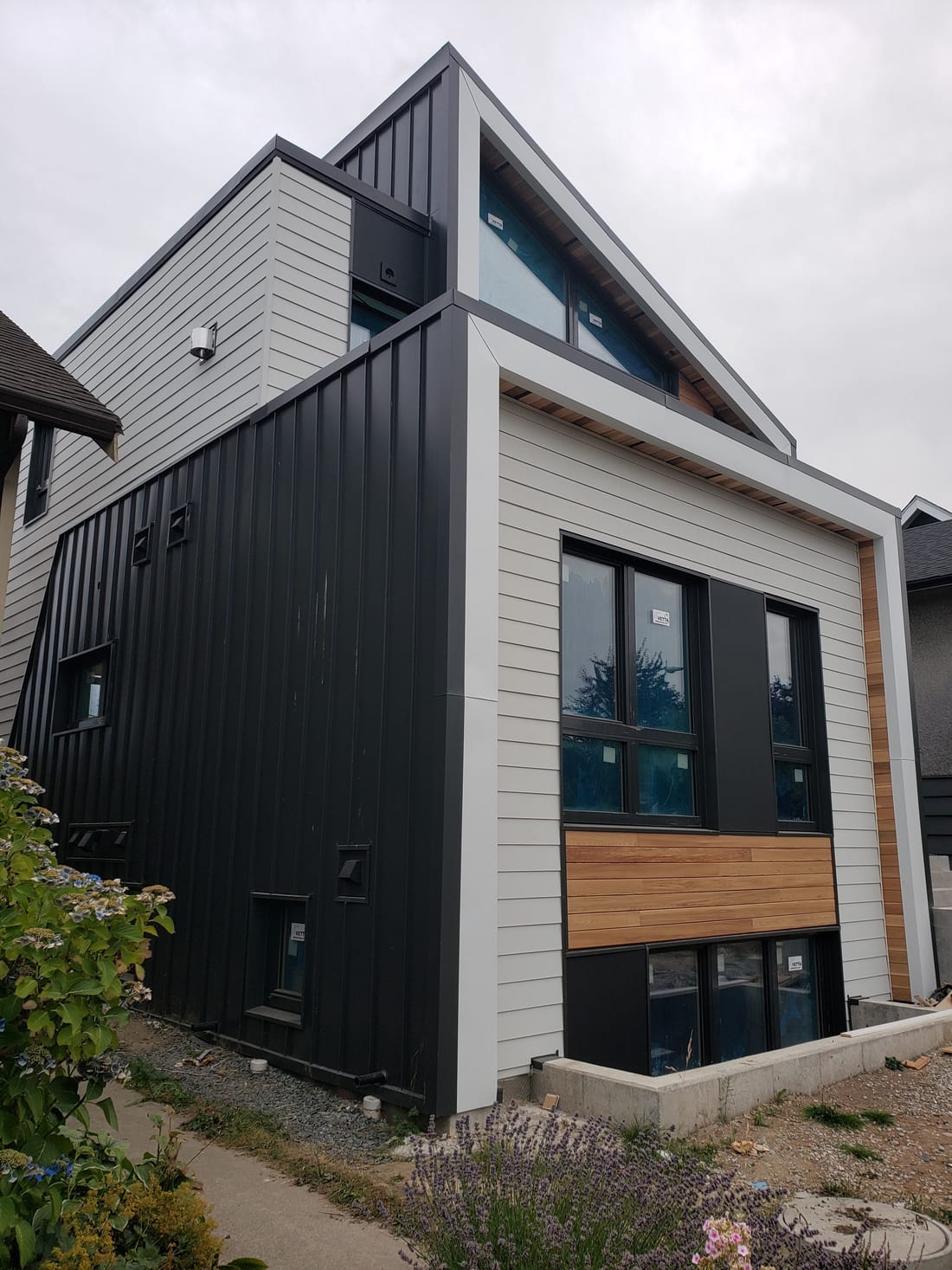
Mixing siding materials works when each material has a clear job and the transitions land on real architectural lines. The combinations proving themselves across the Lower Mainland pair a calm field material, such as lap or panel siding, with a contrasting texture on a distinct volume, gable or entry: woodgrain aluminum against dark fibre cement, cedar warmth against painted panel, or board and batten over lap. Two materials is the sweet spot, three the ceiling.
Why Mixed Exteriors Took Over
Walk any street of new builds from Burnaby to Mission and you will see it: almost nobody clads a whole house in a single material anymore. There are good reasons. Mixing lets designers break big boxes into readable pieces, emphasize entries, add warmth without committing the whole envelope to wood upkeep, and satisfy the layered look that contemporary and farmhouse styles both demand. Done carelessly, though, mixing produces the patchwork effect everyone has also seen, so the craft is in the rules.
Rule One: Give Every Material a Job
A material earns its place by doing something specific:
- The field covers most of the wall area and sets the tone. Horizontal lap, vertical panel or board and batten in fibre cement, engineered wood or vinyl typically plays this role.
- The counterpoint occupies a distinct volume, storey or bay and contrasts with the field in direction or texture: panel against lap, vertical against horizontal, smooth against grain.
- The accent is small and precious: an entry surround, a gable, soffit level warmth. This is where woodgrain finishes and real cedar shine.
If you cannot say what job a material is doing, it probably should not be on the house.
Rule Two: Change Materials at Architectural Lines
Transitions decide whether a mix looks designed or applied. Change materials where the building itself changes: at a floor line marked by a band board, at an inside corner, where a volume steps forward or back, or at the rake line of a gable. Avoid switching partway along a flat wall, and avoid wrapping an accent material a token distance around an outside corner, where it reads instantly as wallpaper. Materials meeting at an outside corner should either both terminate into a corner detail or the accent should own the entire volume.
Every transition is also a flashing detail. Horizontal changes need metal flashing with a drainage gap so water sheds from the upper material past the lower one, all built over a continuous rainscreen. This is detail work where an experienced siding installation crew proves its value.
Combinations That Keep Working Here
Woodgrain aluminum with dark fibre cement
The signature contemporary pairing in the region: charcoal or black James Hardie lap or panel as the field, with woodgrain Longboard or AL13 aluminum warming the entry, garage surround or underside of an overhang. The metal carries convincing wood character with almost no upkeep, so the warmth goes exactly where hands and eyes get close.
Cedar and painted panel
Real cedar siding on a feature wall or gable against smooth painted panel gives authentic grain and ages into character, suited to West Coast modern and craftsman homes alike. Keeping the cedar area modest and reachable makes its refinishing cycle a weekend scale job rather than a scaffold project.
Board and batten over lap
The farmhouse standard: vertical board and batten in the gables or upper storey, horizontal lap below, usually one colour across both so the direction change does the talking. Texture contrast without colour contrast is the quiet version of mixing, and it flatters modest homes especially well.
Panel systems with brick or stone bases
Masonry at the base, panel or lap above, with the material change at a strong horizontal line. The heavy material belongs below the light one; reversing them makes buildings look inverted and uneasy.
Shingle accents on character homes
Fibre cement shingle texture in peaks and bays over lap fields keeps heritage inspired homes in period while modernizing the envelope underneath.
Colour Strategy for Mixed Walls
Material mixing multiplies texture, so restraint in colour keeps the design calm. The combinations that succeed usually take one of two paths: monochrome, where all materials share one colour and only texture varies, or two tone, where the field takes one colour and the accent material brings its own natural tone, typically wood against a neutral. Adding a third strong colour on a third material is where facades tip into noise. Metal accents, gutters and fascia lines work well matched to the darkest tone on the wall.
Practical Notes Before You Commit
Mixed exteriors carry a few realities worth planning for. Each material brings its own trim family and flashing kit, so corners where systems meet take longer to detail. Maintenance schedules diverge, which is an argument for putting the renewable material where a ladder reaches. And samples matter more than ever: view large pieces of both materials together, outdoors, against your roof and windows before ordering, because a pairing that sings in a showroom can clash under an overcast sky. Photograph the samples on the wall at different times of day and check them against the fixed elements you are keeping, such as roofing and window frames. Our materials page is a good starting point for seeing what pairs naturally.
Berkana Construction Management designs and builds mixed material exteriors across Maple Ridge and the Lower Mainland, from woodgrain aluminum accents to full multi texture facades. Call (672) 771-6868 or get in touch to see combinations mocked up for your own elevation.