
Fire-Resistant Siding Options for BC Homes
Fire-resistant siding choices for BC homes: how fibre cement, aluminum panels and other claddings perform against embers, heat and FireSmart guidance.
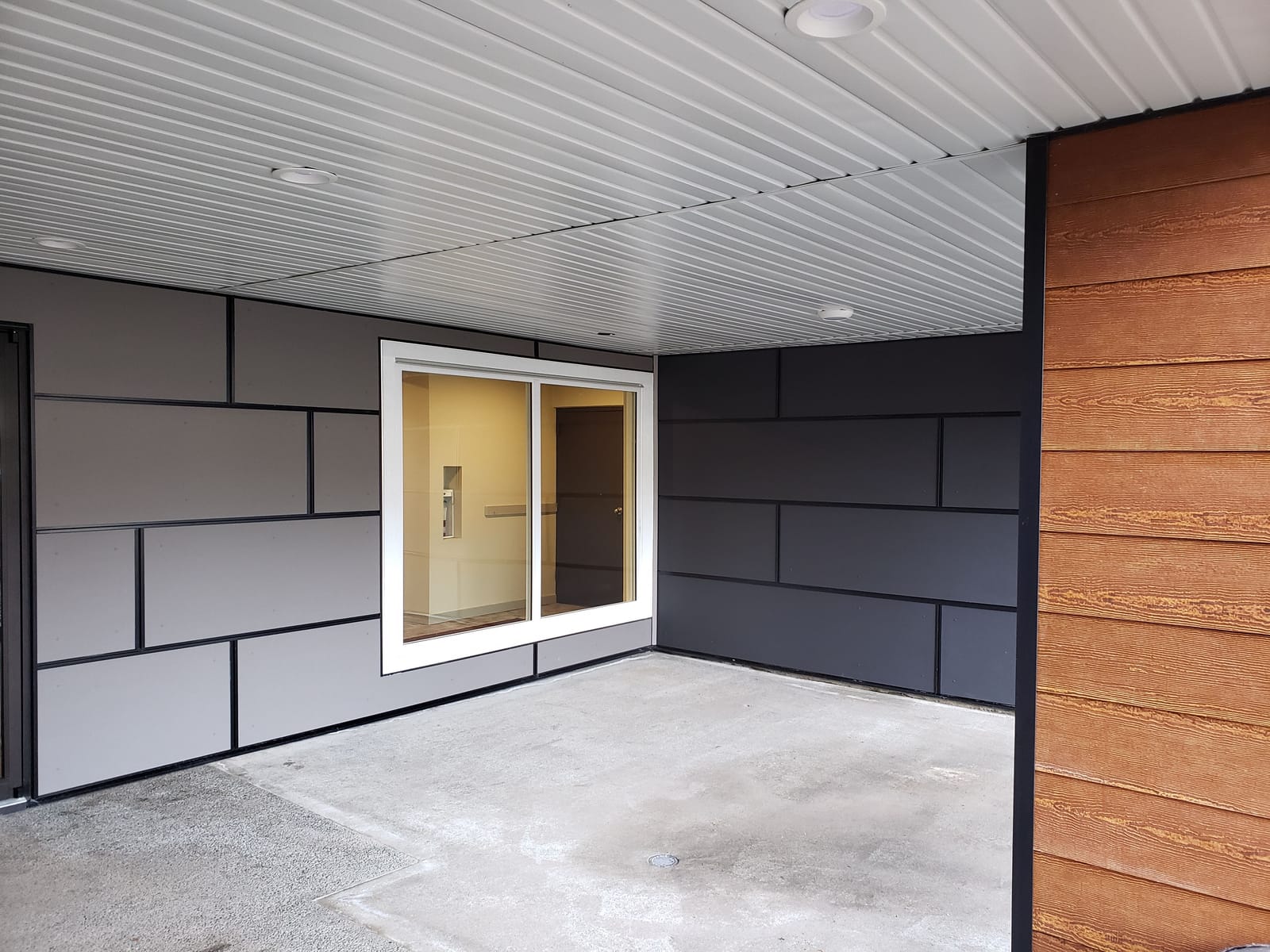
The claddings with the strongest fire performance for BC homes are fibre cement, which is noncombustible and widely available in residential styles, and metal systems such as aluminum panels, which do not ignite at all. Stucco and masonry share that noncombustible standing. Vinyl melts under radiant heat and wood is fuel unless treated, so homes near forested slopes, greenbelts or tight urban lots gain real protection by choosing cladding that will not join the fire.
Why This Conversation Reached the Coast
Fire resistance used to be an Interior conversation. Smoke seasons, evacuation alerts within a day's drive and insurers asking new questions have changed that. Much of the Lower Mainland lives in or beside the wildland urban interface: Maple Ridge backs onto forested slopes, and similar edges run through Coquitlam, North Vancouver and Mission. Add dense infill neighbourhoods where houses stand close enough to radiate heat at each other, and cladding choice becomes a genuine risk decision rather than a purely aesthetic one.
The threat model matters. Homes in interface fires are most often ignited not by a wall of flame but by embers, which can travel kilometres ahead of a fire, and by radiant heat from nearby burning structures or vegetation. Cladding is one of the surfaces those embers land against and that radiant heat cooks. Material behaviour at that moment varies enormously.
The Strong Performers
Fibre cement
Fibre cement leads the practical shortlist because it combines noncombustibility with mainstream residential looks. Made of cement, sand and cellulose, boards such as James Hardie siding do not ignite from ember contact and do not feed a fire, and the same product line covers lap, panel and shingle styles in the full modern colour range. For homeowners who want fire performance without a house that looks like a bunker, this is the default answer, and it is the same material already favoured here for rot resistance in our wet winters. Fire performance arrives as a bonus on a material chosen for the rain.
Aluminum and metal panel systems
Metal does not burn. Aluminum systems such as AL13 panels, Longboard planks and soffits, and Lux panel profiles offer noncombustible walls with contemporary character, including woodgrain finishes that deliver the warmth of cedar with none of its fuel value. Metal soffit material deserves special mention: soffits and vents are prime ember entry points, and noncombustible material at the roofline, covered on our soffit page, closes off one of a home's soft spots.
Stucco and masonry
Traditional stucco, brick and stone are likewise noncombustible and perform well, though they sit outside the siding conversation for most recladding projects. Where an existing home already has a masonry base, pairing it with fibre cement or metal above keeps the whole envelope in the strong category.
The Weaker Performers
Vinyl is the vulnerable one. It softens and sags at temperatures a nearby fire produces long before direct flame contact, and once panels deform or fall away, the sheathing and building paper behind them face the embers directly. Vinyl remains a reasonable choice in many settings, but on interface lots it is the material FireSmart assessments flag first.
Wood and engineered wood are combustible by nature. Cedar can be factory treated with fire retardants for improved ratings, and engineered wood products char more predictably than thin cedar, but both are ultimately fuel. Design can manage this: many homeowners keep wood as a limited accent near the entry while the broad exposed elevations go to noncombustible material, a compromise covered in our note on mixing materials.
Details That Multiply the Benefit
Cladding is one layer of a system, and FireSmart BC guidance treats the home and its first ten metres together. Alongside the siding choice, the details that matter most:
- Ground clearance: Noncombustible cladding for at least the bottom 150 millimetres of wall keeps ground level embers and smouldering mulch from finding fuel.
- Vents and soffits: Fine metal screening on vents and noncombustible soffit material block ember entry into attics and rainscreen cavities.
- Roof edges and gutters: Metal drip edges and clean gutters remove the dry needle and leaf debris that embers ignite first, and gutter guards reduce how often that fuel accumulates through the fall.
- Windows and decks: Tempered glass and noncombustible deck surfaces near walls reduce the routes fire takes into a structure.
- Vegetation: The metre and a half beside the wall does more for survival odds than almost any product upgrade; keep it clear of resinous shrubs and bark mulch, and favour gravel or stone directly against the foundation.
A recladding project is the natural moment to fold these in, since flashing, venting and clearances are all being rebuilt during siding replacement anyway.
Choosing for Your Setting
On a forested Maple Ridge slope or any greenbelt edge, noncombustible cladding and disciplined detailing are worth treating as requirements. On sheltered urban lots, they function as insurance and resale strength, and some insurers are beginning to ask about cladding materials when writing policies in interface postal codes. Either way, nothing about fire performance forces a compromise on looks: the same fibre cement and aluminum systems driving current exterior design happen to be the materials that refuse to burn.
Berkana Construction Management installs fibre cement and aluminum exteriors across Maple Ridge and the Lower Mainland, with detailing informed by wet climate and interface considerations alike. Call (672) 771-6868 or contact us to review your home's exposure and the options that fit it.